




Gender inequality is still a fundamental problem in Indonesia encouraged TEDxEast Cempaka Baru Street Women held on Sunday (1/12) to discuss about it. in the first session with the theme of gender policy, the three speaker, Dian Purnomo (writer and founder of Nulis di Taman), Eva Nurcahyani (founder of Lingkar Study Feminist), and Luviana Ariyanto (founder and editor-in-chief of Konde.co) presented stories that uncovered various layers of problem, from shackling customary traditions, impartial bureaucracy, to an economic system that denies women’s work. They illustrate how women face challenges that comes from same roots: structured, systematic, and perpetuated patriarchy based on their diverse experiences.
Dian Purnomo started the discussion by taking us to Sumba and Sangihe. In Sumba, she witnessed the practice of catch marriage, which was originally part of the custom, but how now turned into systematic sexual violence that deprives women of their rights to their bodies and lives.
In Sangihe, women face the threat of a gold mine that destroys the environment and robs them of the natural resources that have sustained their lives. Dian firmly illustrates that patriarchy not only targets women as individuals, but also destroys nature and women’s communities through biased traditions that are again exploitative in the name of investment.
Read More: ‘Bridget Jones: Mad About the Boy’ Shows Romantic Optimism for Middle-Aged Women
Eva Nurcahyani drew attention to the importance of policies that favor women. She showed how in Banten, despite the existence of regulations such as the Law on Sexual violence Crimes (TPKS Law), implementation often stagnates due to lack of budget, bureaucratic complexity, and lack of victim perspective among state apparatus. Eva highlighted the deep-rooted phenomenon of victim blaming, where survivors of sexual violence often have to repeatedly recount their traumatic experiences only to face an unsupportive system. For her, gender-responsive policies require not only fair laws, but also implementers who are committed to justice itself.
Luviana Ariyanti complemented the discussion with a sharp critique of capitalism as another face of patriarchy. Drawing on her life story as a child of factory workers in Klaten, Luviana illustrated how the economic system often erases women’s contributions to domestic and care work. She highlights the invisibility of care work in the grand narrative of the economic, even though this work is the main foundation for sustainability of society. Konde.co becomes alternatives media she founded, Luviana strives to raise the voices of marginalized women, from domestic workers to factory laborers, who have been forgotten in public discussions.
The experiences of these three speakers offer deep reflections on gender injustice in Indonesia. they invite the audience to go beyond understanding the issues, to take concrete steps to fight for justice.
1. Dian Purnomo – System weakens women, law oppresses women

Picture 1 Dian Purnomo on the TEDXEast Panel. She is explaining about her experience in Sumba which inspired her novel Perempuan yang Menangis kepada Bulan Hitam (doc: Konde.co)
It may be too late to realize, but it’s never too late to speak up
Since childhood, Dian Purnomo has been fascinated by the world of fantasy. She likes the adventures of Tintin, Wiro Sableng, and Deni the Fish man and those became her inspiration. Dian aspired to be a crime-fighting hero, just like Wiro Sableng, whom she had known since she was in the second grade of elementary school. However, at that time she only knew male heroes. She only got to know female heroes like Mulan, Moana, or Gamora much later, as she realized the gender inequality in society.
Dian grew up in an egalitarian communal family from Salatiga, a small town on the slopes of Mount Merbabu and Merapi. Her environment taught her that women and men are equal, with equal access to education and opportunities. This can be seen from the women in her family who became doctors, lecturers, journalists, and empowered housewives.
Read More: Why Are Men So Obsessed with Sex? The Urgency of Getting Out of Toxic Masculinity
The childhood experience made Dian live in her own bubble. She only realized the difference in treatment men and women after she grew up and started working in the social sector.
“Unfortunately, if you pay attention, all the heroes are male. I didn’t know about female heroes like I do now, such as Mulan, Moana, or Gamora. I got to know them too late – or rather, they came into my life too late. just like I realized too late that social inequality exists. That women and men are treated differently on this earth.” Dian explained.
Women who cry to the Black Moon in Sumba and Sangihe
Dian first experience in social work took her to the Sumba region. She saw the social inequality experienced by women in a patriarchal society for the first time. The reality is completely different where in her family equality is the norm.
When she heard about Sumba, she imagined natural beauty and incomparable tradition fabrics. Dian recognized that beauty, although at the same time she found a black moon among the bright sunshine, the black moon called kawin tangkap.
Originally, this practice was an agreement between families within a dowry of the large animal such as a cow, buffalo, or horse. However, since the 1980s, kawin tangkap has turned into sexual violence wrapped in the name of custom. The practice is now often carried out without women’s consent. They are simple “taken”, even on the streets. When women and their families resist, traditional leaders are reluctant to stop the practice for fear of losing other customs.
“in the local language, this practices is called yappa mawine or palangidi. Originally, kawan tangkap was an agreement between a women’s family and a man’s family, where the dowry was a large animal such as a cow, buffalo or horse.”
“But, since the 1980s, when outsiders started coming to Sumba, this practice changes. Many Sumbanese women chose to marry non-Sumba men. Sumbanese men felt that their resources, namely women, were being ‘taken away’ so they turned to the practice of kawin tangkap without traditional procedures. They ‘pick up’ women, event on the streets. This practice is not actually arranging marriage, but sexual, physical and psychological violence wrapped in the guise of custom. This struggle arises because traditional leaders are not willing to stop this practice. They are worried that if one custom is stopped, other customs will disappear,” she said.
Read More: ‘Quickly to Reverse Problematic Policies about Human Rights’ HRW Warns Prabowo-Gibran
On the other hand, the lack of facilities to support victims, such as safe houses or psychologists, make women even more vulnerable.
“In Sumba, for example, there is only one Psychology graduate who provides therapy for victims of sexual violence. There are many victims, around 30 – 40 cases per district per year, while the distance between districts is quite far. Even safe houses are not completely safe because Sumba is a small area so everyone knows each other,’ Dian explained.
From Sumba, work took Dian to Sangihe and she saw women facing a different threat: the gold mine that has devoured more than half of the small island. According to regulations, an island as small as Sangihe should not be mined, but permits are still granted in the name of investment. The environmental damage caused by mining directly harms women, as they responsible for household needs such as water and food.
“when nature is damaged, women suffer the most. In a patriarchal society, women are responsible for providing food, water, and household needs. When these resources are lost, they are vulnerable to domestic violence. Ironically, decisions such as selling land are made by men, without involving women,” she explained.
Women in Sangihe did not remain silent. They blockaded heavy equipment, filed lawsuits, and won a verdict at the Supreme Court. Unfortunately, mining practices continue due to weak law enforcement. Their struggle often leads to criminalization, but they keep fighting for civilization.
Read More: Reflections of the Feminist Movement on the Rejection of JILF: “Who Do We Work With?”
“in Sangihe, women also faced criminalization when they resisted mining. They participated in blocking heavy equipment, providing food for demonstrators, and still taking care of children at home. their lawsuit against the mining license won at the Supreme Court, but the mining practice continues due to weak law enforcement,” Dian said.
Gender inequality in patriarchal societies such as those seen in Sumba and Sangihe is striking. Women carried the burden of household, but are excluded from making important decisions, such as selling land. This inequality triggers domestic violence when environmental resources are lost. Weak regulation further exacerbates the situation.
For example, the memorandum of understanding on the prohibition of capture marriage in Sumba is ineffective because there are no sanctions and no adequate budget. The pro-investor policy in Sangihe also violates environmental regulations, showing that the interests of capital often come at the expense of women’s rights.
Read More: My Struggle to Heal as an Aceh Tsunami Survivor
“From these two regions, it is clear that we are still far from gender justice. For example, in Sumba, there is an MOU to prohibit capture marriage, but without sanctions or a budget for socialization, the impact is very minimal. Capture marriages still occur, and often go unreported,” said Dian.
Dian childhood dream of becoming a hero is now realized through her writing on novels. In her novels, Dian creates an ideal world with gender justice, just as in her childhood family, women are valued equally and crimes are punished accordingly. For her, writing is a way to voice hope for change. As Dian says, “hopefully, this ideal world will one day be realized, but while it is still far away, we must continue to speak out.”
2. Eva Nurcahyani – The regulations are right, the officials are in place

Picture 2 Eva Nurcahyani sharing her experience advocating for the TPKS Law in Banten at the TEDxEast Cempaka Baru (Doc: Konde.co)
Eva Nurchayani has long been involved in the fight for gender equality, particularly in Banten. From the beginning, she realized that women still face various structural, cultural, and social challenges that hinder their access to justice.
In her effort, Eva together with Lingkar Studi Feminist advocated to encourage integrated SOPs between regional apparatus organization (OPD) in Banten. This is important to ensure victims of violence get proper assistance without having to face bureaucratic complexities.
“Unfortunately, many agencies do not understand the importance of the victim’s perspective and are still stuck in a victim blaming mindset,” said Eva.
UN Women data shows that gender-responsive policies have a significant impact in countries that have implemented them. This is evident from the increase in women’s access to education, employment, and public roles. Unfortunately, in Indonesia the implementation of this policy is still far from expectations. Despite regulations such as The Law on the Crime of Sexual Violence (UU TPKS) and presidential instructions on gender mainstreaming, structural challenges and lack of funding have stalled implementation.
Read More: Sexual Violence in Depok: Alleged Perpetrator is a Legislative Member, Activists Urge to Remove His Position
“In reality, the bureaucracy in our country is often a challenge in the process of assisting victims of violence. For example, victims must repeatedly recount the chronology of event, from reporting at the police to the judicial process. This cases that policy implementation is often not victim-centered. There are still many victim blaming practices about victim’s clothing or lifestyle. This is a big homework for us,” Eva explained.
According to Eva, gender-responsive policies cannot be separated from feminist legal theory. This theory emphasizes the importance of gender justice and equality in the legal homework. But in Indonesia, according to her, feminism is often misunderstood.
“There is a stigma that feminists are fierce or angry. In fact, this theory offers a fair and inclusive perspective,” She explains.
Apart from structural challenges, stereotypes are also a big obstacle. In a patriarchal society, women are still considered unfit to lead or be highly educated. This is also evident in the male-dominated decision-making structured. For example, the leadership of Commission VIII of the House of Representatives, which discusses children and women’s issues, is entirely filled by men.
“Women are still often considered second-class citizens. Stereotypes like ‘women are not fir to lead’ or ‘women should focus on domestic affairs’ are still deeply rooted.”
Read More: 10 Best Novels of 2024 According to Literary Experts
“For example, when all members (leaders) of Commission VIII are men, how can they represent women’s experiences? Even though there are men who care about gender issues, there are still limits in understanding women’s biological and social experiences,” she explained.
Funding is another problem that is no less complicated. The legislative process of the TPKS Law, for example, was hampered at the stage of drafting government regulations on funding. Eva underlined the importance of the government’s commitment to ensuring gender-responsive policies can actually be implemented.
“Funding is also a major obstacle in policy implementation. One of the derivative regulations of the TPKS Law that discusses funding is still stagnant,” she continued.
Despite the steep obstacles, Eva did not give up. As a young person, she believes that her generation has a big role to play in driving change. Eva encourages everyone to start from small things, such as education themselves, voicing their concern through campaigns, or working together across communities.
“Moving together, regardless of age or background is the key to creating change. It may be a long journey, but our small steps today will bring big changes in the future,” she concluded.
3. Luviana Ariyanti – Capitalism is patriarchy, vice versa

Picture 3 Luviana Ariyanti during her TEDxEast presentation title “Class and Capitalism: Care workers are not considered work.” (Doc: Konde.co)
Challenging Inequality as a Working-Class Woman
Luviana Ariayanti was born and raised in Klaten, Central Java, in a family of factory workers. Her father worked as a warehouse guard in a factory, while her mother had a dual role as a housewife and sugarcane farm laborer. Her childhood was spent in the laborers’ village, living in simple rented house without private bathrooms.
“We often bathed in the river with friends or used public bathrooms. Life was very simple; our daily meals were sometimes just rice with salt or crackers,’ she recalls.
Even so, Luviana’s parents always instilled the importance of education. Her father, encouraged by his grandparents, took degree at the Faculty of Geography at Gadjah Mada University. Every weekend, he pedaled 40 to 50 kilometers from Klaten to Yogyakarta. This hard work led to Luvinana’s family moving to Yogyakarta and owning their own home for the first time.
Luviana had believed the idiom ‘work hard to be successful’ was true from her father’s story. Until finally Luviana saw a different reality in her neighborhood. Despite having moved, Luviana’s neighborhood was still full of stories of structural poverty. Many of her friend in elementary school failed to make the grade and could not continue study because they needed to help family in the farm or took care of domestic work.
Read More: The End Of Taylor Swift’s Eras Tour Will Be A Loss For Many
“From the first half of my life, I believed that hard work would bring success. However, that belief changed in the second half of my life. I saw that the hard work of those around me was not always enough to break the cycle of poverty. There were systemic barriers that stood in their way,” she said.
When she entered high school in Yogyakarta, Luviana began to realize the wider social stratification. At school, she saw how children from official or middle-class families were treated with more respect. At the same time, she was not familiar whit the concepts of class oppression, social stratification or capitalism. However, she had already felt the impact of all three.
“I see a homogenization of values, such as beauty standards that require women to be fair-skinned and beautiful to be considered attractive. Children from official families were more respected and considered successful. This made me start to question the system. on the other hand, children from simple families tended to be ignored,” she recalls.
This experience became a turning point that encouraged her to see answer through literature. Two books that greatly influenced her thinking were Nawal El Saadawi’s Women at Zero Point and Elizabeth Cady Stanton’s biography.
“From these books, I began to understand that the oppression of women is not just an individual problem, but also part of a larger system,” she explains.
This realization led her to establish a gender studies group called Kalinka, where Luviana and her friends discussed women’s issues, capitalism, and social inequality that one felt experienced during school
Care work, the Invisible Pillar of Capitalism
After graduating, Luviana spent more than two decades working as a journalist in the arustama media. During that time, she saw women’s issues more broadly, from domestic violence to the dual challenges women face as workers and housekeepers.
“I witnessed how women are often burdened with multiple roles, while recognition of their contributions in the domestic and informal sectors in minimal,” she said.
In 2016, Luviana as a journalist-cum-activist founded Konde.co, an alternative media that focuses on women’s issues and marginalized groups. Through this platform, Luviana raises narratives that are rarely highlighted by mainstream media, such as the discrimination of informal workers and the importance of care work.
“Care work is the foundation of social and economic systems, but it remains uncounted in official statistics. Women in this role are often forgotten,” she said.
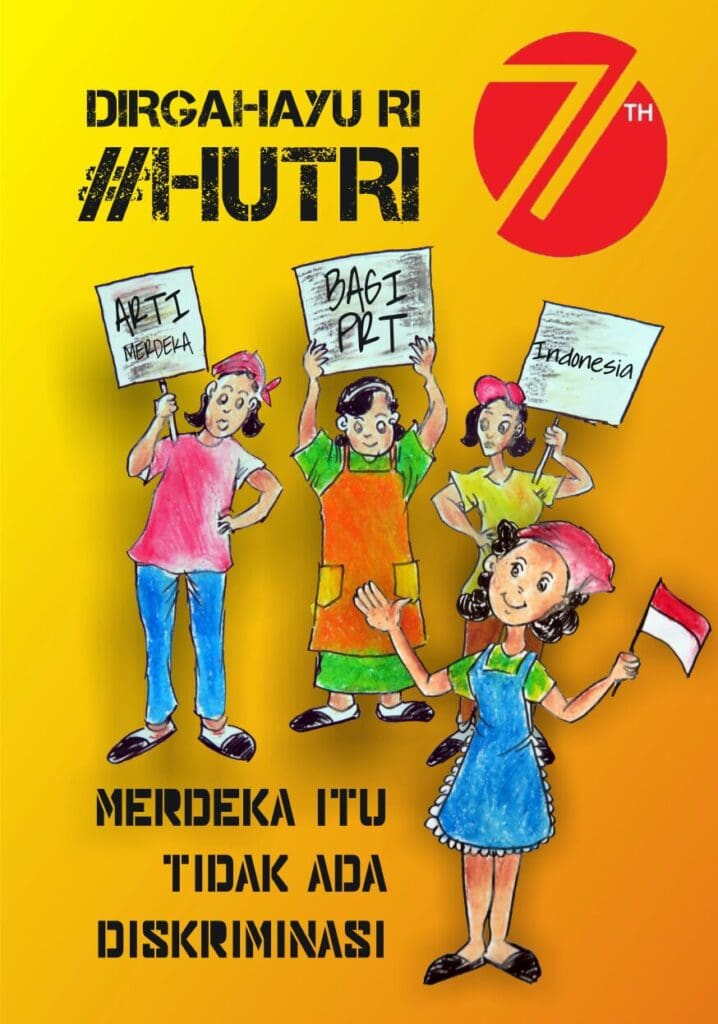
Luviana highlighted how the struggle to recognize and protect domestic workers is far from over. For example, the Domestic Workers Protection Bill, which has been fought for more than 20 years, has not yet been passed.
Read More: Gladiator II: Historians On The Fate Of The Real Roman Royalty
Through Konde.co, Luviana documents the stories of women who face discrimination and injustice. One of them is Yuni Sri, a domestic worked who is only allowed to use the freight elevator in the apartment where she works. another is Jumisih, an activist who started her career as a factory worker in Cakung, Jakarta.
“These stories show the strength of women in facing challenges even though they are often not recognized,” said Luviana.
According to Luviana, the media often only highlights public figures or major events, while the voices of marginalized groups are rarely heard.
“My colleagues and I at Konde.co learned the importance of championing alternative narratives. Otherwise, the media will only highlight public figures or major events, while marginalized voices remain marginalized.”
“We believe that writing is a way to bring new perspectives and fight for justice for those who are nor heard,” she emphasized.
Luviana believes that a fairer world can be realized if everyone contributes to the change effort. Quoting Malala Yousafzai, she emphasizes that every element must join hands to raise their voices to speak for those whose voices cannot be heard.
“I would like to end with a quote from Malala Yousafzai: ‘I raise my voice not so that my voice may be heard, but so that those who cannot speak may be heard,” she concluded.
Read More: #YouthMarginalized: Laborer’s Sunday Nights, Drinking Starling Coffee and Sitting in the Square
Through TEDxEast Cempaka Baru Street Women, Dian Purnomo, Eva Nurcahyani, and Luviana Ariyanti offer complementary insight into gender injustice in the context of customs, policies, and economic systems. Dian’s story reveals the importance of protecting women from traditions that have lost their essence. Eva’s perspective underscores the need for victim-serving bureaucracies and policies that work on paper. Meanwhile, Luviana invites us to recognize the value of care work as an integral part of the economy and life.
All three voiced the same message, that the struggle of women is not only about the fulfillment of rights, but also social justice. TEDxEast Cempaka Baru, initiated by Girl Up Jakarta, is an important space for reflection and action on capitalism and patriarchy.
In addition to the talks from the three women above, TED.East also discussed important issues such as economic issues and climate justice panels from a woman’s perspective. Speakers included Laetania Belai Djandam, an extraordinary indigenous Dayak youth and planetary health practitioner; Khalisah Kalid, Public Engagement and Action Manager of Greenpeace Indonesia; Monakisa Sembor, influencer and Founder of Papuan Trada Sampah; Christina Yaori, CEO of SellerUp Academy & Mompreneur; Denia Isetianti, CEO of Cleanomic & Corporate Lawyer. Furthermore, there is Galuh Ainur Rohmah, Founder and Director of Mestara; Wingky Vitri Saputri, a circular economy specialist at Divers Clean Action; Yasmina Hasni, Founder of AKAR Family; and Intan Khatulistiwa, a dynamic entrepreneur and growth marketer who has been empowering Indonesia startups for over 12 years.