



Indonesia is undergoing sweeping political changes that have had profound consequences across many aspects of people’s lives, particularly for marginalized communities, including queer people. Ranked among countries with a high level of safety risk for queer people in Riskline’s 2025 research, and among countries with relatively low levels of queer acceptance according to the World Population Review, Indonesia appears unlikely to move away from this reality anytime soon. If anything, the current political and social climate risks making the situation even worse.
The widespread and increasingly overt persecution of queer people, both on social media and in everyday life throughout mid-2026, has further narrowed the spaces in which queer people can live safely and openly. This has been compounded by regulations that frame queer people as a non-military threat. Such measures and acts of persecution raise serious concerns about constitutional protections, including every citizen’s right to legal protection, personal security, and freedom from torture and degrading treatment. The Convention Against Torture also recognizes severe physical or mental suffering intentionally inflicted for particular purposes as torture.
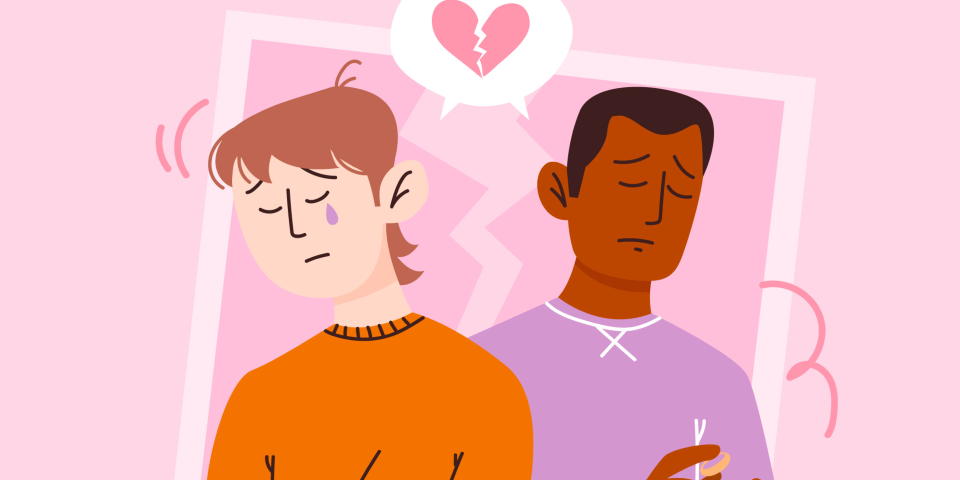
As the space available to queer people in Indonesia continues to shrink, there is another critical issue that can make them even more vulnerable: becoming trapped in an abusive intimate relationship.
Globally, intimate partner violence (IPV) in queer relationships remains largely overlooked and under-discussed. Seminars, public education campaigns, and conversations about preventing IPV continue to focus primarily on heterosexual, cisgender relationships. This leaves queer survivors with fewer opportunities to recognize their experiences as violence and even fewer places where they can seek support without having their identities questioned or stigmatized.
Read more: Celebrating Pride Month 2025, How LGBT Survives in a Situation of Discrimination: Konde.co Research
Internalized homophobia, toxic masculinity, and patriarchy do not disappear simply because a relationship is queer. They can also shape relationships between queer people, influencing how power is distributed and how violence is understood. Yet spaces for acknowledging, reporting, and recovering from IPV within queer relationships are nowhere near as available or accessible as those designed for cisgender heterosexual relationships.
Power dynamics that manifest as physical, psychological, economic, and sexual violence are often dismissed as something that “only happens in heterosexual relationships.” Violence in queer relationships may instead be treated as an exception, or as a problem that does not fit conventional understandings of intimate partner violence. This is simply not true.
Such assumptions further silence survivors by shrinking the spaces in which they can safely speak about what they have experienced and seek help. When violence is not recognized as violence because the people involved do not fit the expected gender roles of “victim” and “perpetrator,” survivors are left to navigate abuse without the language, services, or community support they need.
Queer people also face significant barriers when seeking help through services provided by the state. Although many laws and regulations use ostensibly inclusive language such as “anyone,” the reality can be very different once authorities learn that the relationship in question is a queer relationship, or that the survivor’s gender expression does not conform to prevailing social norms.
Instead of focusing on the violence experienced by the survivor, attention can shift toward their identity as a queer person. Widespread stigma portraying queer people as sexually promiscuous, constantly changing partners, or even as predators can make seeking justice in cases of IPV feel almost impossible.
Read more: After the Days of Hell in Jakarta: The Death of Ita Martadinata as Recalled by Ita Fatia Nadia
For queer partners, the threat of violence from an intimate partner can also take another form: the threat of exposing their sexual orientation or gender identity to their family, workplace, or community.
Outing can itself become a tool of coercion and control. For someone who already fears rejection from family or society, the threat of having their identity exposed can be enough to keep them trapped in an abusive relationship. The psychological impact can be devastating. The fear of being left completely alone—and the belief that no one other than their partner will accept their identity—can leave survivors increasingly isolated.
This creates a vicious cycle. A survivor may know that their relationship is unsafe, yet still feel that leaving would mean losing the only person who knows and accepts them. When the wider society offers little protection and the queer community itself does not always have sufficient support systems, the abusive partner can become both the source of violence and the person the survivor feels they cannot afford to lose.
Communities, which should ideally provide spaces where survivors can seek support and justice, do not always provide that protection.
It is not uncommon for a community to protect an alleged perpetrator simply because they were part of the community before the victim, or because the perpetrator is perceived as more valuable to the community’s survival. This can be reinforced by the belief that IPV is fundamentally a manifestation of cisgender heterosexual relationships and therefore cannot occur in queer relationships.
As a result, reports of violence may be perceived as a threat to the movement itself, dismissed as fabricated, or treated as an internal conflict that should not be made public. Survivors may even be accused of not understanding how queer relationships “work.”
Read more: I’ll Be Back in Jakarta: Stories of Rural Women Who Move to the City
This places survivors in an impossible position. Speaking out can mean risking not only the relationship but also their social networks and sense of belonging. Remaining silent, meanwhile, allows the violence to continue.
The same pattern can also be seen in cases of sexual violence. People still struggle to imagine sexual violence in situations where the perpetrator does not fit the “ideal perpetrator” and the victim does not fit the “ideal victim”—concepts that are themselves rooted in a heteronormative framework in which men are typically associated with perpetration and women with victimhood.
This heteronormative bias can affect everyone involved in a case: those who receive reports, those who handle them, those who read them, and those who provide support to survivors. Questions and assumptions about queer relationships frequently return to the imposition of gender roles and gender expression: “Who is the man in this relationship?”
The question may sound simple, but it reveals a fundamental misunderstanding of how power operates within relationships.
Power dynamics are often interpreted solely through gender expression rather than understood within the broader context of the relationship. This can lead to hasty conclusions that a relationship involved “mutual abuse,” even when one person has clearly experienced coercion, control, intimidation, or violence from the other.
For example, when both the victim and perpetrator are cisgender lesbians, they may be automatically regarded as equally capable of violence. Meanwhile, when both are cisgender gay men, they may be assumed to share equal responsibility because both are perceived as occupying a masculine social position.
Read more: Indonesia’s Garbage Emergency: Scavengers Buried Under Mountains of Garbage in Bantar Gebang
These assumptions make it difficult to separate narrow, heteronormative bias and stigma from the way queer relationships are understood. At the same time, they prevent people from recognizing that the same forms of violence found in cisgender heterosexual relationships—including coercive control, sexual violence, psychological abuse, physical violence, and economic abuse—can also occur in queer relationships.
The question should therefore not be who plays “the man” or “the woman” in a relationship. It should be: who has power, who is exercising control, who is experiencing harm, and what circumstances make it difficult for the survivor to leave?
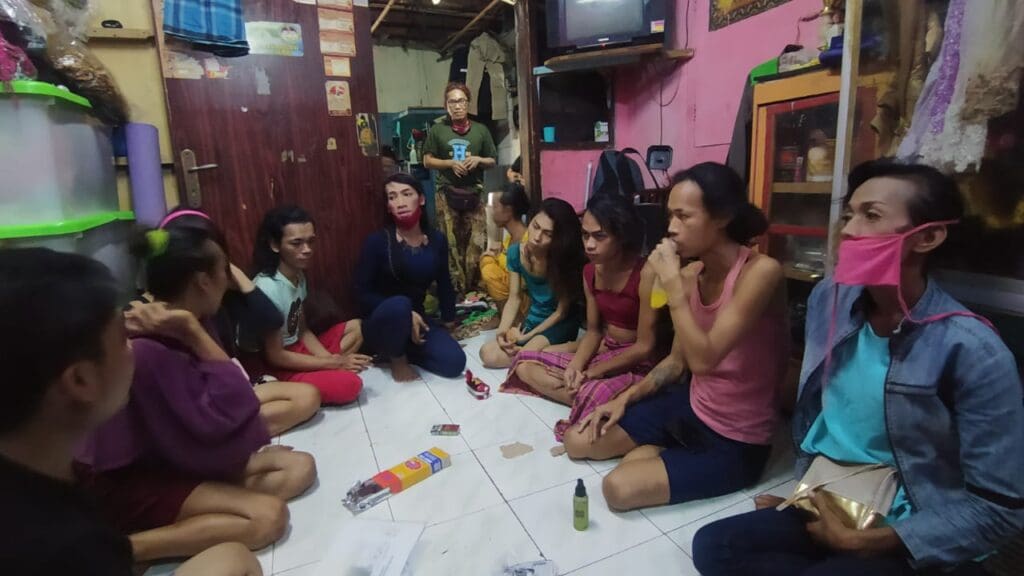
In cases of IPV involving transgender people, these challenges can become even more complicated.
When a person’s gender expression is already perceived as violating social norms, people may become even more confused about the relationship itself—particularly when the relationship is between two trans women, two trans men, or a trans woman and a trans man.
Again, applying a heteronormative framework is unhelpful in understanding and unpacking IPV. Instead of examining the actual dynamics of the relationship, observers can become preoccupied with determining which person is supposedly “male” or “female,” or which person occupies a particular gender role.
At the same time, transgender people often have less room to navigate society than other queer groups, including when it comes to economic opportunities. This economic vulnerability can directly shape their ability to leave an abusive relationship.
One of the difficulties that can arise as a consequence of violence—or function as violence itself—is financial abuse. For queer people, particularly transgender people, the impact of economic abuse can be compounded by structural discrimination.
Read more: Indonesia’s Garbage Crisis: The Irony of Women Amid the Stench of Garbage
Economic abuse within intimate relationships can take many forms, including labor exploitation by a partner, control over a survivor’s income, preventing them from working, or taking control of their financial resources. For transgender people, these forms of abuse can intersect with economic violence perpetrated through structural discrimination based on gender expression.
When access to decent and stable employment is already limited, leaving an abusive partner may not be a realistic option without some form of economic support.
Under a political climate in which persecution is increasingly normalized or tolerated, the places where transgender people earn a living can also become increasingly unsafe. Busking and sex work, for example, are not occupations that can guarantee safety or security. Their labor is sought after and used, yet their safety is frequently disregarded.
There have been numerous cases of trans women being assaulted or killed while simply trying to earn enough to survive, yet society often fails to recognize these incidents within the broader context of violence and discrimination. Media coverage, too, can frame such cases primarily around the victim’s gender identity or sexual orientation rather than emphasizing the fundamental fact that violence was committed against a human being.
This framing matters. When a person’s identity becomes the headline while the violence disappears into the background, society risks treating violence against queer and trans people as an inevitable consequence of their identity rather than as something that should be condemned and addressed.
All these layers of hardship converge into one reality: the absence of safe spaces, both within and outside queer communities, has made life increasingly difficult for queer people in Indonesia.
This is why it is so important to continue extending a hand to queer survivors of IPV who no longer know where to turn in their search for justice and safety.
Read more: 2025 Year-End Edition: Women’s Resistance in the Season of Arrests and the Year of #DemocracyApocalypse
At a time when the spaces available to queer people are becoming increasingly constrained and no longer allow them enough room to breathe, acknowledging that IPV within queer relationships exists—and that it is real—is the first step toward rebuilding the foundations of genuinely safe spaces.
Building support networks within queer communities for survivors, creating accessible and non-judgmental reporting mechanisms, and dismantling internalized heteronormative assumptions are no longer optional. They are essential.
A survivor-centered approach must also be firmly upheld. “Mutual abuse” should not become a convenient shortcut for dismissing a case or avoiding the difficult work of understanding power, coercion, and vulnerability within a relationship. Every case deserves to be examined on its own terms, with attention to the survivor’s experience and the specific dynamics of the relationship.
Safe spaces cannot simply mean spaces where queer people are allowed to exist. They must also be spaces where queer people can say, “I am being hurt,” and be believed, supported, and protected.
Because when queer people are already being pushed out of public spaces, subjected to stigma, and denied meaningful protection, the last thing they should have to fear is that there will be nowhere safe to turn when the violence comes from within their own intimate relationships.
If queer people, their communities, and their allies do not help one another build those spaces, then who else can survivors turn to in their search for justice?
(Editor: Salsabila Putri Pertiwi)