




Governments may change, years may pass, but Rina, an LGBT person, has always lived in difficult conditions. Finding money is difficult, being kicked out of work, it feels like surviving the turmoil of life.
In Yogyakarta, many trans women are discriminated against and thrown out of their jobs. Rully Malay, together with transwomen at the Waria Crisis Center (WCC) shelter in Yogyakarta, ended up running a laundry business, growing and making cendol from aloe vera, and making eco-print batik. Various businesses are run hand-in-hand to survive.
In 2015, together with Perkumpulan Suara Kita, Hartoyo also created the Sri Kendes brand for clothing products designed and sewn from archipelago fabrics. Furthermore, since 2020 when the Covid-19 pandemic hit, Hartoyo has developed the sale of preloved goods.
The existence of independent fundraising has successfully overcome the economic crisis, although it has not yet been completely resolved.
These efforts were made amidst the discrimination and violence they experienced. Over the past decade, human rights issues for gender and sexuality minority communities in Indonesia have continued to face serious challenges.
Konde.co then collected and analyzed 2 things. First, an analysis of discrimination and criminalization cases against gender and sexuality minority communities that rose to the surface in the period October 2024 to June 2025. Second, how they survive in the midst of a difficult situation.
Konde.co Research on Discrimination and Violence Situation 2024-2025
The results of Konde.co’s data journalism show that there is still a significant escalation in the pattern of discrimination and criminalization of gender and sexuality minorities in Indonesia with a total of 66 cases.
This record is just an iceberg of other layers that are not visible. However, these cases involve a wide range of actors and cover various forms of oppression.
The case analysis was conducted by manually searching through the Google search engine between October 20, 2024 and June 24, 2025 with keyword queries: LGBT, waria, transpuan (transgender), gay, and pesta gay (gay party).
The findings reveal a systematic pattern of criminalization, discriminatory policies, and anti-LGBT rhetoric in Indonesia. Various actors, both state and non-state, are actively involved in these efforts.
It is important to remember that these findings are the iceberg of the huge discrimination faced by gender and sexuality minority communities in Indonesia.
Law enforcement is at the forefront of efforts to criminalize gender minorities, often through aggressive operations and broad legal interpretations.
Throughout the period November 2024 to June 2025, there was an intensification of discriminatory acts against the LGBT community in Indonesia, with a peak in June 2025 recording a total of 15 incidents. Five of these cases involved criminalization. This number represents a sharp increase compared to previous months, and reflects a systematic pattern of repression in the month of pride.
Read more: Sexism in Student Arrests and Maternal Activism Mothers Defend Their Children’s Struggles
The patterns of discrimination seen are not only fluctuating, but also tend to be concentrated at certain moments, which may coincide with broader political or social dynamics. December 2024, which coincided with the simultaneous regional elections, and February 2025, when the #IndonesiaGelap action broke out, for example, recorded 11 and 8 discriminatory cases, with the dominance of stigmatizing and threatening statements from state and public actors. These statements are often packaged in moral rhetoric and nationalism, which strengthens the legitimacy of symbolic violence and paves the way for structural and legal violence.
While discriminatory policies do not appear every month, there was a significant spike in April and May 2025, with three discriminatory policies issued each. These policies generally contain bans on activities associated with “LGBT propaganda”, restrictions on gender expression in public spaces, and sectoral rules such as bans on affirmative health services. This reinforces that the state not only allows discrimination to occur, but is also the main actor in producing regulations that are exclusionary towards LGBT citizens.
Meanwhile, the discriminatory dismissals recorded in April 2025 and November 2024 show that pressure on LGBT individuals also targets workplaces and institutions, cutting off their access to a decent and equal life. These cases confirm that discrimination is not only present in discourse and policy, but also in concrete actions that deprive the LGBT community of their economic, social and professional rights. In this context, dismissal based on sexual orientation or gender identity becomes an effective yet brutal mechanism of social control.
The findings show that Indonesia has faced and continues to face waves of surveillance, criminalization and stigmatization of gender and sexuality minority communities. What have they experienced?
Read more: Is Our Public Transportation Gender Responsive and Inclusive? Konde.co Research Results (1)
In Indonesia, being part of a gender and sexuality minority community is a matter of surviving a minefield of laws. The existence of gender and sexuality minority communities is not considered a violation of national law on paper, but every action can be used as a reason for action.
Regime after regime, in addition to a record 45+ discriminatory anti-LGBT local regulations in force, the state merely uses successive multi-interpretive laws of decency articles that make queer identities easy targets for moral control and social repression.
Prabowo’s regime was no exception, in a legal construct dominated by heteronormative norms, being different not only made queer communities invisible to the law, but also made them fully exposed to legitimate violence.
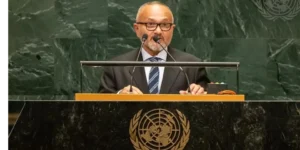
In a hearing at the House of Representatives on November 14, 2024, the Secretary General of the National Resilience Council (Wantannas), Vice Admiral TNI T.S.N.B. Hutabarat stated that LGBTQ or Lesbian, Gay, Bisexual, Transgender and Queer issues are a threat to the country’s priorities in 2025.
According to Albert Wirya, Director of LBH Masyarakat, who was interviewed by Konde.co, statements made without logical basis and thorough research have the potential to increase persecution and violence against LGBTQ people in Indonesia. Echa Waode from Arus Pelangi said that these statements further fuel hatred.
“In the current Prabowo administration, it is getting worse. Many rules and policies are discriminatory against LGBT people, such as the Wantannas statement that LGBT people are a threat to the state. This reinforces stigma and discrimination, and there was even a club closure in South Jakarta due to residents’ hatred. Under Prabowo’s leadership, discriminatory regulations are increasing,” Echa Waode, General Secretary of Arus Pelangi, told Konde.co.
Read more: Is Public Transportation Gender and Inclusion Perspective: The Sweet Promise of Inclusivity, Still Broken Here and There (2)
Data shows a series of raids and arrests of individuals suspected of being involved in same-sex activities or LGBTI-related activities. Examples include the arrest of two students in Banda Aceh who were prosecuted under the Qanun Jinayat. Outside Aceh, there was a raid on a bar in Permata Hijau, South Jakarta, which was accused of being the location of an “LGBT party.”
The Jakarta Metro Police also raided an alleged gay party at Rasuna Hotel in South Jakarta, arresting 56 men, and nine men were arrested for an alleged gay party in the Setiabudi area.
Most recently, on June 23, 2025, a queer community gathering was searched by the police on suspicion of a gay party in the Bogor area, evidence based on police reports secured were community contest dance equipment and condoms. The 75 victims who were searched were also forced to take consecutive HIV tests and the status of the test results was made public.
In addition to police raids, the Civil Service Police (Satpol PP) in various regions routinely conduct raids targetingwaria (transwoman). For example, 3 waria were caught by Surabaya Satpol PP on January 4, 2025, and a similar raid was conducted on Jalan Stasiun Gubeng Lama on December 2, 2025. Satpol PP Mojokerto district also disciplined waria under the pretext of “disturbance of public peace and order” or “socio-economic vulnerable women.” The raid in Madiun was even linked to HIV tests and condoms as evidence of waria who were said to be HIV positive.
Criminalization also extends to the online sphere, such as the arrest of students in Pasuruan for same-sex online prostitution, the arrest of a gay couple in Bengkalis for TikTok live broadcasts that were considered obscene and charged with the ITE Law and the Pornography Law.
In addition, there was also the arrest of the admin of the Facebook group “Gay Tuban Lamongan Bojonegoro” by Polda Jatim and the admin of the Facebook group “Gay Khusus Surabaya” by Polres Tanjung Perak. Tuban police also arrested two men who were allegedly active users of “Gay Tuban” Facebook group. This incident was then followed by the TikTok account “Gay Hunter Ponorogo” which tricked and then spread the identities of gay individuals who were victimized.
Read more: Is Public Transportation Gender and Inclusion Perspective: Speeding Driver Doesn’t Follow the Route, Passengers Are Afraid to Reprimand (3)
“Even though they are only in their community, they don’t bother other people and don’t even harm the state. But why should they be criminalized for reasons that don’t make sense,” said Echa Waode.
Frequent raids and arrests, especially targeting online gatherings or groups, point to a proactive and widening surveillance and law enforcement strategy by law enforcement officials. This approach goes beyond individual actions and targets community spaces and digital networks, with the aim of dismantling social infrastructure and communication channels for gender and sexuality minority individuals.
“People who hate one group can easily report both the private spaces of friends, such as groups on Facebook. The space for friends to move is actually limited by a transphobic society,” continued Echa.
This pattern shows that law enforcement not only reacts to reported violations, but actively monitors and disrupts the social spaces of gender and sexuality minorities, both physical and digital. The involvement of entities such as “Badan Siber Ansor Tuban” in “social media patrols” further supports the idea of coordinated efforts to police online activities.
Meanwhile in Aceh, the physical and public enforcement of the Qanun Jinayat law is still a scourge for gender and sexuality minority communities there. Most recently, there was a case of a man being publicly flogged for same-sex relations in February 2025.
In addition to direct forms of law enforcement, discriminatory policies and regulations have also continued to be developed and institutionalized by various levels of government under the Prabowo regime.
The West Sumatran parliament, for example, drafted a regional regulation on LGBT eradication, explicitly labelling LGBT as a “community disease”.
Read more: The Path of Ojol Women, Betting on the Heat of Asphalt and Algorithms: Konde.co Research Results (1)
In Gorontalo, the local government issued a circular letter prohibiting waria (transgender women) and singers from participating in public events, mixing entertainment elements with narratives of moral decadence.
In Ciamis, the local regent even ordered special patrols to crack down on LGBT activities in public spaces such as town squares. The expansion of this policy shows that discrimination has been institutionalized at the local level and has become part of the official approach to “social order.”
More worrying is the inclusion of this discriminatory approach in state policies related to health and education.
The Ministry of Health, through Ministerial Regulation No. 2 of 2025, explicitly refers to different sexual orientations as disorders and even supports conversion therapy practices. This constitutes a form of pathologization that directly contradicts the global and even national scientific and medical consensus in the Diagnostic and Statistical Manual of Mental Disorders, and violates human rights principles such as bodily autonomy and freedom from degrading treatment.
This policy is in line with the Ministry of Social Affairs’ definition since 2012 of LGBT people as individuals with “impaired social functioning”, demonstrating the continuity of the state’s narrative justifying forced corrective and remedial measures.
In the education sector, local governments such as those in Sukabumi and Cianjur, with the support of the Indonesian National Armed Forces, have categorized students who are considered LGBT into groups that must be “guided” in barracks as part of a project by Dedi Mulyadi, the Governor of West Java, who issued instructions to place “delinquent students” in barracks.
This system reflects the state institution’s model of forced re-education aimed at “correcting” the orientation and identity of young individuals deemed deviant.
“It’s ineffective conversion therapy. Being yourself is not a crime. You can’t judge someone just by their gender expression,” said Echa Waode.
Read more: Women Ojol’s Path, Betting on Asphalt and Algorithms: Konde.co Research Results (2)
The proposed Broadcasting Bill further reinforces this by expanding censorship of online LGBT content, the main purpose of which is “to protect children” according to the DPR, signalling that LGBT marginalization is now done through media surveillance and control of expression.
“All stakeholders agree that content restrictions, both in conventional and digital media, must be firm and consistent. We don’t want LGBT shows that harm our children,” said Abraham Sridjaja at the Parliament Complex, Tuesday (17/6).
Being transgender means living a life under constant surveillance. During the period under analysis, this surveillance came not only from a society that judged based on conservative norms, but also from the state in the form of law enforcement and vague articles of law that could be interpreted in various ways. One of the articles commonly used to attack transgender identities is the article on blasphemy.
Two prominent cases that occurred in this analysis period are the cases of Ratu Thalisa and Isa Zega.
The Ratu Thalisa case that surfaced on March 10, 2025, is the most obvious example of this targeting pattern. A transgender person known on social media for her satirical style and sharp criticism of various social issues, Thalisa suddenly became the national spotlight because of a content that was considered insulting to Christianity. In the video, she delivered a satire by comparing Jesus’ long hair to the prohibition for men to “resemble women”.
Although the content contained satire commonly found in the digital space, the accusations against Ratu Thalisa did not stop at the content of the statement. Her transgender identity became the centre of criticism, both in the courtroom and on social media. She was not only accused of insulting religion, but also of “defaming nature” and “dragging deviant identities into sacred discourse”. The accusations were later legally confirmed: two years and ten months in prison and a fine of Rp100 million were imposed on her. Not just for her words, but for who she was.
Read more: Cabinet Absent, Women’s Issues Absent: Research on 100 Days of Prabowo-Gibran Government
Shortly after Thalisa’s case, on November 20, 2025, Isa Zega, a transgender woman also known as an online celebrity, was reported to the police for blasphemy. The accusation was that he performed Umrah with a gender identity that was considered “violating the sharia”.
This case sparked strong reactions from various parties. Various community organizations such as Masyarakat Cinta Islam (MCI) and Front Persaudaraan Islam (FPI), as well as public figures such as Nikita Mirzani, voiced demands for Isa to be punished. Not because of what she said, but because she was considered to have “brought a heretical identity to the Holy Land.”
The Indonesian Ulema Council (MUI) of Gorontalo even stated that LGBT is not just a form of blasphemy, but “something much worse than that”. In the eyes of some communities and religious institutions, Isa Zega’s existence as a transgender woman who worships is an insult like an unforgivable sin.
In these two cases, the blasphemy law was used not to safeguard religious values, but to set “permissible” gender boundaries. Laws that are said to prevent religious hostility are instead used to punish self-expression that does not conform to heteronormative norms.
By utilizing powerful and emotion-laden blasphemy laws, conservative actors can effectively criminalize the public existence of transgender individuals, thus rendering their identity an inherently religious offense.
The implications for freedom of expression are significant, especially for transgender individuals who often face challenges in expressing themselves authentically in public and digital spaces. These cases set a dangerous precedent that could limit the space and presence of transgender people in Indonesia, forcing them to hide their identities or face severe legal consequences. This fundamentally undermines their right to live with dignity and equality.
Read more: Records on Prabowo-Gibran’s 100 Days of Work from the Perspective of Women and Social Justice
State institutions, particularly the police, are also actively discriminating against LGBT-identified personnel.
Several regional police forces (Polda) have terminated the service of police personnel who are “LGBT” or “homosexual.” Examples include Polda Metro Jaya which fired 1 member, Polda Riau which fired 42 police officers, Polda West Sumatra which PTDH 34 personnel, Polda East Nusa Tenggara (NTT) which dismissed Brigadier L and Ipda H, Polda Bali which released an article about 17 police officers who were dismissed, one of them for being LGBT, and Polda North Sumatra (Sumut) which fired former deputy director of Special Crimes AKBP DK.
The widespread discriminatory dismissals within the police, coupled with explicit statements from the TNI, indicate a concerted effort to enforce “moral purity” within the state security apparatus.
This not only violates individuals’ rights to employment and non-discrimination, but also sends a clear message that LGBT identities are incompatible with public service, potentially creating an environment of fear and self-censorship within these important institutions.
At the same time, the TNI, through various commands, issued a “Statement Accompanied by Threats” explicitly stating that “strict action” would be taken against personnel engaging in LGBT behavior.
It is this TNI/Polri perspective that makes gender and sexuality minorities feel threatened over their identities with the passage of the TNI Law.
“Now with the revision of the TNI Law, it is also frightening for friends of the LGBT community. The fear is that the roles of the TNI can also take over the roles of the police. So they can enter the realm of privacy, can do sweeping or raids, it’s scary,” said Echa Waode.
Read more: Ahmad Dhani Being ‘Racist’ and ‘Sexist’, Komnas Perempuan Urges DPR-RI to Investigate the Case
Discriminatory treatment is also often carried out by police officers to gender and sexuality minority communities who are in conflict with the law. The treatment ranges from extortion to violence over their identity.
“The police often focus on the realm of privacy (sexual orientation, gender expression) instead of the case. There are people who take advantage of the situation to blackmail or force the victim to come out to the family. So instead of focusing on the case, it goes into the realm of privacy like being asked:
“how come you like to play anal sex”
“how come you like to play male to male”
“are you transgender or female?”
“how come you have breasts?”
So there is indeed a difference in treatment from the police to community friends,” Echa said.
Strong and often aggressive anti-LGBT rhetoric comes from various actors, both state and non-state.
The convergence of anti-LGBT rhetoric from various actors- government agencies, the military, religious organizations, student groups, and even community leaders-shows a broad, multi-sectoral consensus on the LGBT “threat”.
This creates a powerful and mutually reinforcing narrative that legitimizes discrimination and criminalization, making it very difficult for LGBT individuals to find allies or legal recourse.
Read more: TEDxEast Cempaka Baru Street Women Expose the Face of Capitalism and Patriarchy
The data shows that almost every category of actor is involved in cases of “Statements Accompanied by Threats” Wantannas (Government) calls LGBT a priority threat to the state. The TNI (State apparatus) vows to take strict action against any LGBT individual because they are considered deviant.
Various community organizations (CSOs) such as the Indonesian Ulema Council, the Muslim Brotherhood Front, the West Java Alliance of Islamic Movements (API Jabar), and GP Ansor actively rejected and demanded action, often using extreme and degrading language.
Various student organizations also held discussions and made propaganda videos. Even the “General Public” and “Public Figures” engaged in public rejection and calls for legal action. These widespread, consistent, and often aggressive messages from diverse and influential sectors show that anti-LGBT sentiment is deeply rooted and widely accepted in many walks of Indonesian life.
This collective front creates an environment where discrimination is not only tolerated but actively encouraged and justified, making it extremely challenging for the LGBT community to fight for their rights or even live safely within wider society. This multi-sectoral consensus effectively isolates LGBT individuals and legitimizes their marginalization.
To provide a clearer picture of the pattern of events and actors involved, the following table shows the distribution of case types based on the main actors involved:
Distribution of Case Types by Main Actors Involves (October 2024-June 2025)
| Type of Case | Government | State Officials | Mass Organizations | StudentOrganizations | General Public | Public Figures | Mixed/Other | Total |
| Criminalization | 0 | 14 | 0 | 0 | 0 | 0 | 1 (Mass Organizations + State Officials) | 15 |
| Criminalization of Sharia Law | 0 | 1 | 0 | 0 | 0 | 0 | 2 (State Officials + Government and State Officials + Citizens) | 3 |
| Discriminatory Dismissal | 0 | 6 | 0 | 0 | 0 | 0 | 0 | 6 |
| Statement | 1 | 0 | 1 | 0 | 0 | 0 | 0 | 2 |
| Statement Accompanied by Threats | 8 | 3 | 9 | 8 | 3 | 1 | 0 | 32 |
| Policy | 6 | 0 | 0 | 0 | 0 | 0 | 2 (State Officials + Government) | 8 |
| Total | 15 | 24 | 10 | 8 | 3[TPES1] | 1 | 5 | 66 |
Note: The “Mixed/Other” column includes cases where the main actor involves a combination that is not specifically classified in other categories, or actors who only appear once and are not significant enough to warrant a separate category.
The high number of “Statements Accompanied by Threats” from CSOs and Student Organizations, potentially followed by a spike in “Official Policies” from the Government, may indicate a causal chain where public pressure from non-state actors influences state policy. This illustrates the dynamic interaction between different sectors of society.
The following is a chronology of key criminalization cases and policies that occurred within the analysis period:
| Date | Type of incident | Description | Involved main actor |
| 07/11/24 | Criminalization of Sharia Law | Two students were arrested in Banda Aceh for same-sex relations. They were prosecuted under the Aceh Jinayat Law (liwath article). | State Officials (Satpol PP/WH Banda Aceh, Police) and Residents |
| 14/11/24 | Statement Accompanied by Threats | Wantannas declared LGBT issues a “priority threat to the state in 2025” and equated “queer” with zoophilia/pedophilia.. | Government (Wantannas) |
| 14/11/24 | Statement Accompanied by Threats | Oleh Soleh supports Wantannas’ view, urging serious handling of the “phenomenon of the rise of LGBTQ” and its relationship with the decline in marriage rates. | Government (Oleh Soleh, Member of Commission I of the House of Representatives) |
| 18/11/24 | Statement Accompanied by Threats | The Student Executive Board (BEM KM) of Andalas University held a symbolic action rejecting LGBT. They urged the leadership of Andalas University to focus on LGBT issues. | Student Organization (BEM KM Unand) |
| 18/11/24 | Statement Accompanied by Threats | “Isa Zega, you are a transvestite. Even though you have been legally recognized as a woman in court, your nature remains male. This is no longer blasphemy. He has mocked Islam. Please take action,” said Niki in a video she uploaded to her Instagram Story. | Public Figure (Nikita Mirzani) |
| 20/11/24 | Criminalization | Isa Zega, a transgender woman, was reported for blasphemy because she performed the umrah as a transgender person. | Civil Society Organization (MCI); State Authorities (South Jakarta Metro Police) |
| 20/11/24 | Statement Accompanied by Threats | Member of the Indonesian House of Representatives from the PDIP, Mufti Anam, demanded that the police arrest Isa Zega for blasphemy. | Government (Member of the House of Representatives, Mufti Anam) |
| 23/11/24 | Statement Accompanied by Threats | Demanding that Isa Zega be punished based on the MUI fatwa that “all deviant transgender behavior is haram and must be corrected to return to their original nature.” | Mass Organization (Islamic Brotherhood Advocates (API) Islamic Brotherhood Front (FPI) DKI Jakarta) |
| 02/12/24 | Criminalization | The Surabaya Public Order Agency (Satpol PP) conducted a raid around Jalan Stasiun Gubeng Lama in the early hours of the morning, arresting a transgender individual on suspicion of soliciting customers or partners. | State apparatus (Surabaya Public Order Agency) |
| 02/12/24 | Statement Accompanied by Threats | The UNY Student Executive Board (BEM UNY) posted “SAY NO TO LGBT,” which was deleted shortly after sparking public debate. | Student Organization (BEM UNY) |
| 07/12/24 | Statement Accompanied by Threats | The Women’s Forum (FP) of BEM SI held a national consolidation meeting titled “Saving the Generation: Breaking the LGBT Chain” | Student Organization (BEM SI) |
| 12/12/24 | Statement Accompanied by Threats | The Riau University Student Executive Board (BEM Unri) posted a statement asserting that LGBT is a disease and a deviation, accompanied by the hashtags #JagaMoralBangsa #StopNormalisasiLGBT #PutusMataRantaiLGBT. | Student Organization (BEM Unri) |
| 15/12/24 | Statement Accompanied by Threats | The Indonesian Ulema Council (MUI) of Penajam Paser Utara firmly rejects the planned transgender beauty pageant reportedly scheduled for Thursday, December 26, 2024. | Mass Organization (MUI Penajam Paser Utara) |
| 16/12/24 | Statement Accompanied by Threats | The Commander of the Air Force Military Police Unit (Dansatpomau) at Husein Ssstranegara Air Base, Major Pom Herdi Muhammad Ramdhan, emphasized that the Indonesian Air Force will take firm action against personnel proven to be involved in LGBT (lesbian, gay, bisexual, and transgender) behavior. | State Officials (Indonesian National Armed Forces) |
| 22/12/24 | Statement Accompanied by Threats | Sultan Hasanuddin Air Base Commander Air Marshal Bonang Bayuaji G emphasized that he would take firm action against personnel involved in cases of sexual deviance or lesbian, gay, bisexual, and transgender (LGBT) behavior. | State Officials (Indonesian National Armed Forces) |
| 22/12/24 | Statement Accompanied by Threats | BEM SI held a live Instagram discussion titled “Unpacking the LGBT Phenomenon: Impact, Solutions, and the Role of Women.” | Student Organization (BEM SI) |
| 23/12/24 | Statement Accompanied by Threats | BEM SI created a propaganda video rejecting LGBT with words such as “Destroy,” “Eradicate,” “Disgusting,” “Disease,” “Defective,” “Annihilate,” “Slaughter,” and others. | Student Organization (BEM SI) |
| 31/12/24 | Discriminatory Dismissal | 42 police officers were dismissed from the Riau Regional Police, some of whom were dismissed because they were accused of being LGBT. They were classified as “rogue police officers.” | State Apparatus (Riau Regional Police) |
| 31/12/24 | Discriminatory Dismissal | The West Sumatra Regional Police dismissed 34 personnel, some of whom were considered to be LGBT. | State apparatus (West Sumatra Regional Police) |
| 03/01/25 | Discriminatory dismissal | The Metro Jaya Regional Police dismissed one member for “being involved in LGBT,” out of a total of 31 dismissals. | State apparatus (Metro Jaya Regional Police) |
| 04/01/25 | Official Policy | The West Sumatra Regional People’s Representative Council (DPRD) drafts a bylaw on the eradication of LGBT, calling LGBT a social ill. | Government (West Sumatra DPRD) |
| 04/01/25 | Criminalization | Three transgender women were caught in a raid by the Surabaya Public Order Agency (Satpol PP). The raid was conducted as part of a program to address Socioeconomically Vulnerable Women (WRSE). | State Apparatus (Surabaya Satpol PP) |
| 06/01/25 | Criminalization | A bar in Permata Hijau, South Jakarta, was closed after being accused of hosting an “LGBT party.” | State Apparatus (Jakarta Metro Police) |
| 16/01/25 | Statement Accompanied by Threats | The West Java Islamic Movement Alliance (API Jabar) urged the provincial government and the West Java DPRD to create strict regulations to address LGBT behavior to prevent it from spreading to other communities. | Community Organizations (API West Java) |
| 01/02/25 | Criminalization | Jakarta Metro Police raided a gay party at the Rasuna Hotel, South Jakarta. 56 men arrested, 3 named as suspects. | State Apparatus (Polda Metro Jaya) |
| 01/02/25 | Statement Accompanied by Threats | The Alliance of Islamic Mass Organizations of North Sumatra strongly rejects the gathering of the Cangkang Queer community in Medan. | Mass Organizations (Alliance of Islamic Mass Organizations) |
| 01/02/25 | Statement Accompanied by Threats | The Student Executive Board (BEM SI) held a public discussion “: Assessing the Urgency of Eliminating LGBTQ+ from an Expert Perspective” | Student Organization (BEM SI) |
| 10/02/25 | Statement Accompanied by Threats | The Indonesian National Air Force (TNI) National Air Force Command (Koopsudnas) held a lecture on LGBT mitigation at the Leo Watimena building, National Air Force Command Headquarters, Jakarta. | State Apparatus (TNI) |
| 10/02/25 | Discriminatory Dismissal | The North Sumatra Regional Police (Sumut) dismissed the former Deputy Director of Special Crimes (wadirkrimsus), AKBP DK, for allegedly being homosexual. | State Apparatus (Sumut Regional Police) |
| 10/02/25 | Statement Accompanied by Threats | “This gay behavior must be a concern for all parties because it is in direct conflict with religious norms and Pancasila. This behavior is also very unhealthy and dangerous, so there needs to be strict legal sanctions against perpetrators. We must be aware of the health risks it poses, as same-sex parties have the potential to accelerate the spread of sexually transmitted infections (STIs), including HIV/AIDS, which remains a serious threat in Indonesia,” said Surahman, Member of Commission III of the Indonesian House of Representatives. | Government (Surahman, Member of Commission III of the Indonesian House of Representatives) |
| 11/02/25 | Statement Accompanied by Threats | The UNP Student Executive Board (BEM UNP) held a discussion with the theme “Recognize the Dangers of LGBT, Save the Nation’s Future Generation.” | Student Organization (BEM UNP) |
| 17/02/25 | Criminalization of Sharia Law | Men and transgender people in Aceh raided for same-sex relations. | State Apparatus (Banda Aceh Public Order Agency/WH, Police); Government (Aceh Provincial Government); Residents |
| 05/03/25 | Discriminatory Dismissal | The Bali Regional Police released an article alleging that 17 police officers were dishonorably discharged (PTDH), one of whom was suspected of being LGBT. | State Apparatus (Bali Regional Police) |
| 10/03/25 | Criminalization | Sentenced transgender Ratu Thalisa to 2 years and 10 months in prison and a fine of Rp 100 million for hate speech against Christianity. In her content, Queen Thalisa responded to a netizen’s comment, “Don’t resemble a woman. Your hair should be shaved,” which she responded with satirical content that Jesus also had long hair and should have shaved. | State Apparatus (Medan District Court) |
| 13/03/25 | Policy | Minister of Health Regulation No. 2 of 2025 declares different sexual orientations a disorder and supports corrective/conversion therapy. | Government (Ministry of Health) |
| 21/03/25 | Statement Accompanied by Threats | Dozens of people from the Indonesian Care Tolak LGBT (Skin Care Tolak LGBT) union held a peaceful demonstration at the Indonesian Ulema Council (MUI) headquarters and then proceeded to Bening’s Clinic, rejecting influencers and LGBT promotions. | General Public |
| 24/03/25 | Discriminatory Dismissal | The East Nusa Tenggara (NTT) Regional Police dishonorably discharged Brigadier L and First Inspector H for being homosexual. | State Apparatus (NTT Regional Police) |
| 10/04/25 | Criminalization | Madiun Public Order Agency (Satpol PP) conducted a raid on sex workers and transgender women, apprehending those suspected of being HIV-positive and confiscating condoms as evidence. | State Apparatus (Madiun Public Order Agency) |
| 14/03/25 | Policy | Ciamis Regent orders LGBT patrols in Ciamis town square | Government (Ciamis Regent, Herdiat) |
| 16/04/25 | Criminalization of Sharia Law | Two students were arrested in a public restroom in Banda Aceh for same-sex relations. They will be prosecuted under Sharia law. | State Apparatus (Banda Aceh Public Order Agency/WH, Police) |
| 23/04/25 | Statement Accompanied by Threats | The Indonesian Ulema Council (MUI) of Gorontalo Province emphasized that the LGBT phenomenon is not merely a form of blasphemy, but something far worse. | Mass Organization (MUI Gorontalo) |
| 25/04/25 | Policy | The prohibition of transgender people is stipulated in Circular Letter Number 800/BKBP/76/IV/2025 concerning the Prohibition of Crowded Public Entertainment Activities and Celebrations Involving Transvestites, Singers, Alcohol, Drugs, and Gambling, signed by the Acting Regional Secretary on behalf of the Regent of Gorontalo on April 25, 2025. | Government (Gorontalo Regional Government) |
| 29/04/25 | Policy | The Gorontalo Regency Regional People’s Representative Council (DPRD) supports the Gorontalo Regional Government Circular Letter prohibiting transgender people from attending public celebrations. | Government (Gorontalo Regency Regional People’s Representative Council) |
| 03/05/25 | Policy | Students considered LGBT are categorized as a group that must be fostered in barracks in Cianjur | Government (West Java Provincial Government, Sukabumi Regency Government); Apparatus (TNI) |
| 05/04/25 | Statement | The Regent of Southwest Aceh (Abdya), Dr. Safaruddin, campaigns against LGBT through exercise. “Avoid drugs, free sex, LGBT, and online gambling, which ultimately leads to online loans (pinjol). So enjoy exercise, because exercise can keep your body and mind healthy.” | Government (Regent of Southwest Aceh (Abdya), Dr. Safaruddin) |
| 08/05/25 | Policy | Students considered LGBT are categorized as a group that must be fostered in barracks in Sukabumi | Government (West Java Provincial Government, Sukabumi Regency Government); Indonesian National Armed Forces (TNI) |
| 14/05/25 | Statement | The Indonesian Ulema Council (MUI) recommends that homosexual grooms undergo sex change surgery. | Indonesian National Organization (MUI) |
| 15/05/25 | Criminalization | A student in Pasuruan was arrested for online gay prostitution. | State Officials (Pasuruan Police) |
| 19/05/25 | Policy | The government expands censorship of online LGBTQ+ content through the Broadcasting Bill. | Government, KPI |
| 27/05/25 | Criminalization | Nine men were arrested for allegedly holding a gay party in the Setiabudi area, South Jakarta. | State Officials (Jakarta Metro Police) |
| 30/05/25 | Criminalization | A gay couple in Bengkalis was arrested for a TikTok livestream deemed obscene. Charged under the ITE and Pornography Laws. | State Apparatus (Bengkalis Police) |
| 30/05/25 | Statement Accompanied by Threats | Following a video lecture in which the caption stated that Shunniya Ruhama was “suspected of being a transvestite,” her Instagram account was flooded with over 700 comments, many of which were negative, such as: “Oh my God, a transvestite is being made a religious teacher, talking about the Quran and hadith”; “Hey, realize your true nature” | Citizen (Netizen) |
| 02/06/25 | Statement Accompanied by Threats | Batu Bara Regent, Baharuddin Siagian, urges the entire community to eradicate deviant LGBT social behavior | Government (Batu Bara Regent, Baharuddin Siagian) |
| 03/06/25 | Criminalization | The East Java Regional Police arrested four admins of the viral Facebook group “Gay Tuban Lamongan Bojonegoro.” | State Apparatus (East Java Regional Police) |
| 15/06/25 | Criminalization | The Mojokerto Regency Public Order Agency (Satpol PP) and joint units conducted a patrol to address disturbances to public order and disciplined two transgender women who worked as a singer and a sugarcane cutter. | State Apparatus (Mojokerto Regency Public Order Agency) |
| 17/06/25 | Statement Accompanied by Threats | Requesting that the Broadcasting Bill include censorship of LGBT-related content. “All stakeholders agree that content restrictions, both in conventional and digital media, must be firm and consistent. We don’t want LGBT-related broadcasts that are detrimental to our children,” said Abraham at the Parliament Complex, Tuesday (June 17). | Government (Member of Commission I of the House of Representatives, Abraham Sridjaja) |
| 18/06/25 | Criminalization | Tuban Police have arrested two men with the initials J (45) and AJ (30). Both are suspected of being active users of the Facebook group “Gay Tuban.” | State Apparatus (Tuban Police) |
| 18/08/25 | Statement Accompanied by Threats | The Ansor Cyber Agency of Tuban will intensify social media patrols to monitor and report LGBT activity on social media. | Mass Organization (GP Ansor Tuban) |
| 19/06/25 | Criminalization | Tanjung Perak Police, Surabaya, arrested the admin of the Facebook group “Gay Khusus Surabaya”. | State Officials (Tanjung Perak Harbor Police, Surabaya) |
| 22/06/25 | Statement Accompanied by Threats | FPI and HMI reject and demand the cancellation of the color run event organized by Toserba Yogya Ciamis, deeming it synonymous with LGBT symbols. | Mass Organization (FPI and HMI) |
| 22/06/25 | Statement Accompanied by Threats | The TikTok account Gay Hunter Ponorogo trapped and spread the identities of gay individuals who were members of a gay group on Facebook. | Netizen |
| 23/06/25 | Criminalization | Police raided a villa suspected of hosting a “gay party” in Bogor, West Java, arresting 75 people. Four contraceptive devices and a sword used for a dance performance were seized as evidence. | State Apparatus (Bogor Police) |
| 24/06/25 | Statement Accompanied by Threats | “This is very disturbing. Besides being contrary to the religious and socio-cultural norms of the Bogor community, the presence of participants who have tested positive for infectious diseases such as HIV certainly adds to the concern. We are concerned and hope that an incident like this will not happen again,” said Fahim in his statement. | Government (Head of the NasDem Party Faction of the Bogor Regency DPRD, Fahirmal Fahim) |
| 24/06/25 | Statement Accompanied by Threats | Demanding that the raid on the alleged gay party in Bogor be dealt with firmly. | Government (Bogor Regent, Rudy Susmanto) |
| 24/06/25 | Statement Accompanied by Threats | Declaring the alleged gay party in Bogor anti-human and anti-humanitarian, deviant and shameful, and must be prosecuted. | Mass Organization (Bogor MUI) |
| 24/06/25 | Statement Accompanied by Threats | Declaring that the maximum penalty for LGBT people is necessary and deeming LGBT people contrary to all religions and prohibited by the government. | Mass organizations (PBNU) |
The oppression of the LGBT community in Indonesia is the result of complex interactions between state and non-state actors, which cumulatively create serious impacts on human rights.
The active and multi-layered involvement of state actors—from policy makers to law enforcement and the military—demonstrates a state-sanctioned and institutionalized approach to LGBT oppression.
This goes beyond individual prejudice and indicates a systematic attempt to control and marginalize LGBT citizens, ultimately undermining the state’s obligation to protect human rights.
The data consistently lists “Government” (e.g., Wantannas, DPRD, Ministry of Health, Provincial Government, District Government, Regent, Member of Commission I DPR, Member of Commission III DPR) and “State Apparatus” (e.g., Satpol PP/WH, Police, Polda Metro Jaya, Polres, TNI) as the main actors in various types of cases: “Official Policies,” “Criminalization,” “Discriminatory Dismissal,” and “Threatening Statements”.
This deep involvement, starting from the drafting of laws (West Sumatra Regional Representative Council) and the issuance of ministerial decrees (Minister of Health Decree No. 2/2025), to conducting raids and arrests (various Regional Police and Satpol PP), and even purging personnel (various Regional Police and TNI), demonstrates a coordinated effort, from top to bottom and bottom to top, within the state apparatus. This is not only a reflection of existing public opinion, but the active formation of public and legal reality by the state itself.
These systematic efforts to control and marginalize LGBT citizens, emanating from different levels and branches of government, directly undermine the state’s fundamental obligations to protect human rights, including the principles of non-discrimination and equality for all citizens.
Strong and often aggressive rhetoric from non-state actors, particularly religious and student organizations, acts as significant social and political pressure, pushing state actors towards more repressive measures. This dynamic creates a feedback loop in which societal intolerance is reinforced and then translated into formal policy and law enforcement. “Threatening Statements” cases are overwhelmingly dominated by “mass organizations” and “student organizations.”
These groups often use extreme and demeaning language in their online statements, actions and activities. This consistent and often aggressive public pressure exerts considerable influence on political discourse and policymaking. The explicit call for “strict rules” from the West Java Islamic Movement Alliance addressed to the provincial government and DPRD demonstrates this direct lobbying. This demonstrates a symbiotic relationship in which non state actors mobilize and amplify anti-LGBT sentiments in society, and state actors, in turn, respond by implementing formal policies and enforcement actions, creating a mutually reinforcing cycle of oppression.
This dynamic highlights how societal intolerance can translate into institutionalized discrimination.
The multi-pronged attack on LGBT rights-legal, policy, social, and institutional-creates a widespread climate of fear and marginalization that goes beyond outright criminalization.
This systematic pressure aims to erase LGBT identities from public life and force them into invisibility, fundamentally undermining their dignity and ability to thrive as full citizens.
The results of all categories in the data show that LGBT individuals in Indonesia face a comprehensive and interconnected network of oppression. Each category of cases contributes to the cumulative impact. Criminalization leads to loss of freedom and physical harm. Discriminatory policies limit access to essential services such as education and health, and restrict participation in public spaces. Dismissal of workers is discriminatory because it denies workers who seek livelihood and professional dignity. The constant onslaught of negative and often demeaning statements from various influential actors fosters widespread social stigmatization and hostility.
The combined effect of these actions is not just individual harm but a systematic attempt to push LGBT individuals out of public view, denying their existence.
Echa punctures the logic of uniformity and voices loudly her belief in the right to live in diversity. She refuses to submit to narratives that corner her identity and chooses to stand tall in pride of who she is. For her, being different is not a mistake, let alone a crime. “As long as it doesn’t harm other people or the country, I’m proud to be a trans woman. We live in a diverse country, why should it be uniform?” said Echa.
How LGBTQ Survive
In the midst of strong discrimination and transphobia, they also continue to strategize to survive.
Konde.co spoke with a number of transgender and gender and sexuality diverse communities in Jakarta, Yogyakarta and NTT about their efforts to survive. There are a number of efforts they make such as the fulfillment of basic rights in the form of ID cards and social security. These efforts are important so that transwomen have access to public services.
Rully Malay in Yogyakarta, utilizes an open area near the women crisis centre shelter in Yogyakarta to plant aloe vera.
When it grows and is ready to be harvested, the aloe vera is processed into cendol. They sell it in jars to be sold to the surrounding community. The sales are still manual, limited to the area around the shelter and Yogyakarta. They have not yet used online shopping applications.
“Most of the people living in shelters are elderly people with limited skills. They are technologically illiterate and none of them use social media,” said Bunda Rully, Coordinator of WCC Yogyakarta, to Konde.co.
Aloe vera cendol made at the WCC Yogyakarta shelter. Photo: Doc. Mother Rully
Not only selling aloe vera cendol, they also run a laundry business that operates in the shelter. The scale is not big, because it is only run by about 2 washing machines. The process of sorting clothes, washing, ironing and drying is done by the transwomen in the shelter.
Elderly transwomen ironing laundry clothes at the WCC Yogyakarta shelter. Doc. Mother Rully
Currently, they are also developing an ecoprint batik-making business. They do all the process from preparing the white cloth, printing natural leaves to complement the motif, coloring the batik, drying, until they get the ecoprint result.
This includes the “Teratai” ecoprint batik and aloe vera cendol drinks produced by elderly transgender women who live in the WCC shelter because they have been abandoned. Some are stranded at the station, unable to afford rent, lacking identification, and even in poor health. Rully shows off their ecoprint batik products, packaged in boxes.
Meanwhile, some aloe vera cendol drinks are packaged in plastic cups. Others are still stored in clay pots. They provide refreshment in the shy midday sun.
“However, we have to survive in the midst of limitations. We share our roles by working independently,” said Rully.
WCC Yogyakarta coordinator Rully Malay in Badran village, Yogyakarta, Sunday, June 22, 2025. KONDE/Pito Agustin Rudiana.
Because depending on funding from donor agencies cannot last forever. US President Donald Trump’s policy of limiting the work of a number of donor agencies, for example, has also affected the transgender community.
Not only these two products, Rully is also developing health serum and soap products with assistance from doctors. And in 2025, WCC opened a laundry service, from washing to ironing clothes.
“This year, we are also developing a stay-in program for colleagues who go to Yogyakarta. You can backpack there,” said Rully.
Those who stay overnight are provided with a room that was previously the living room at the WCC Office. The two-door room is partitioned and adjacent to the room used as an office. Meanwhile, five other rooms are occupied by the elderly trans women there.
“We don’t charge (colleagues) how much to stay. It’s a donation,” added Rully.
The income from various products, laundry services and lodging donations is used to finance office operations and rent of IDR 17 million per year.
“It’s very difficult to raise funds in this situation. Social media is no longer effective. We only managed to raise three million rupiah. We are still struggling to extend the lease,” said the winner of the 2024 SK Trimurti Award from the Alliance of Independent Journalists (AJI).
Efforts are being made to boost the production of MSME products, such as adding new products and expanding marketing. Previously limited to sales to business associates and for event merchandise, these products are now also marketed through social media. MSMEs are also participating in MSME exhibitions held by various parties.
“Once participating, we can bring 30 ecoprint products. Meanwhile, the manufacturing process takes a week. Four sheets a day,” she added.
In addition, Rully is working on a proposal for cooperation with researchers on the issues of elderly transgender shelters. There is also cross-subsidization from German lecturers by seeking shuttle assistance for elderly transwomen who need regular dialysis from the shelter to the hospital.
“So we don’t rely on donors at all. We believe in a system that is built, planned, and integrated with development. Especially with the local governments of Sleman and Bantul, where we live. We continue to approach them,” she explained.
She gave an example, there is assistance in efforts to make identity cards (KTP) for elderly transwomen, so that they can access health insurance and social security services.
“Because those who live in shelters have to undergo dialysis once a week. They can also access direct cash assistance (BLT),” she explained.
In addition to WCC, Yogyakarta is also home to Yayasan Kebaya, a shelter for transgender women with human immunodeficiency virus (HIV) and acquired immunodeficiency syndrome (AIDS). Over time, not only transgender women are cared for there, but also people living with HIV (PLHIV) and people living with AIDS (PLWHA) with diverse gender identities, including cisgender women and cisgender men, and even children. They are generally cared for there because they have been abandoned by their families.
Vinolia Wakijo, 68, a transgender woman from Yogyakarta, was one of the founders of Kebaya, which at that time was a non-governmental organization (NGO).
“I wanted to save the lives of my friends, but I didn’t know how,” says Vin.
Director of the Kebaya Foundation, Vinolia Wakijo at the Kebaya shelter, Wednesday, June 18, 2025. KONDE/Pito Agustin Rudiana.
Five transgender women got together and founded an NGO called LSM Keluarga Besar Waria Yogyakarta, also known as LSM Kebaya, on December 18, 2006. Apparently, the name “Kebaya” that Vin had suggested had been in the works for a long time. This was because he had long dreamed of founding an organization.
“That’s great,” replied her friends.
In addition to establishing an NGO and financing office rent, the institution also helped Kebaya conduct outreach activities, going out into the field to reach high-risk transgender women on the streets for one year.
“So the program is not related to treating transwomen with HIV,” Vin said.
She secured a rental property worth Rp8 million per year. Vin took care of the notarial deed with the help of a private hospital doctor whom she had known since her time at the Indonesian Family Planning Association (PKBI). She also invited 12 transgender women with HIV to live with her in the rental property. The house was too big for Vin to live in alone. Meanwhile, her friends returned to their respective boarding houses after their activities.
The rented house became the Kebaya Secretariat as well as a shelter for transwomen with HIV. Since then, Kebaya’s sustainability has depended on one donor organization after another. Although the programs of these institutions do not directly relate to HIV and AIDS.
At the very least, Vin was able to set aside his salary as program manager for the needs of transgender people living with HIV. He also set aside incentives he received after being invited as a guest speaker in various places, even outside the city in Jakarta, Bali, Surabaya, and Palembang. He also worked at the Victory Plus Foundation in Yogyakarta, which has also been dealing with HIV and AIDS since 2009 until 2019.
“Yes, Mami is the spearhead. But friends have been amazingly helpful, really easing the responsibility,” Vin said.
Considering that it is not only the funding program that must be carried out, Vin also has the responsibility to care for PLHIV and people living with AIDS who are treated at the shelter. There are at least seven people and sometimes up to 20 people. Meanwhile, there are only seven rooms available.
“Mom sleeps in the living room. The bedroom is for them,” she said.
At the beginning of the Covid-19 pandemic in 2020, there were 15 PLHIV treated at Kebaya. From adults to children. Vin took care of them together with Rully Malay.
Once again, a miracle happened. Her colleagues abroad contacted her to send aid. Some sent Rp20 million, which was used to buy food. Likewise, her Facebook followers sent aid in the form of basic necessities quietly.
Then her colleague in Germany asked Vin to make a proposal for a donor agency there. The program was not related to HIV and AIDS, but rather to food security for six months. The proposal was successful.
“During Corona, people had difficulty finding food. Here, there was a surplus, to the point that it piled up,” he recalled.
Her friends worked hard to pack the aid into food packages for distribution. This was enough to help 300 transgender women in Yogyakarta, sex workers, and street children. Residents living near the shelter were also included. Kebaya also helped pack the packages into plastic bags to be hung on the fence so that they could be accessed by members of the public in need.
Apparently, the German donor organization was interested in Kebaya’s ability to survive. The assistance continued for two years. Then it was extended again until 2026. And in August 2025, Kebaya was asked to make another proposal for sustainability until 2032.
Vin once again invited her transgender friends to work together. Rully Malay was the program manager, and YS was the monitoring and evaluation officer. A total of 12 staff members were recruited, both transgender and other gender identities. Kebaya, which is now a foundation, rented a house specifically for their office.
Vin did not expect her life journey to this day. She can’t stop expressing her gratitude.
“Oh my God, it’s amazing the journey of my life, from absolutely nothing. It turns out that if everything is done well and sincerely, there are no frills for profit, there is sustenance, it is part of the process,” she said.
Currently there are 12 ODHIV living in the Kebaya shelter. Six of them are transgender. They don’t do many activities. They mostly stay in the room. There are also those who help sweep the floor, mop, wash. As for taking care of them, Vin is assisted by ODHIV transwomen who were also treated there in the past.
In the living room, there is also a glass display case that contains various daily necessities. There are instant noodles, soy sauce, coffee sachets, as well as various basic necessities such as cooking oil, sugar, eggs. These items are sold to shelter residents and the public.
Vin calls it “Warung Sembako Mak Onah” (Mak Onah’s Grocery Store). The Joint Business Group (Kube) began in September 2024. It has already recouped its initial investment, allowing it to increase the shelter’s income.
“Let there be activities in the shelter. The important thing is that the bookkeeping is neat. What is sold and what is spent is recorded. Even if it’s just to buy salt,” Vin said.
In addition, there is also the Waria Islamic Boarding School in Yogyakarta. YS Al Buchory, 58, waited for her neighbor who was repairing the handle of the door to the Waria Al Fatah Islamic Boarding School Secretariat, which was stuck, on Monday afternoon, June 16, 2025. No other students were there to accompany her. The boarding school is only busy when there are activities there. Its regular activity is reciting the Quran every Sunday afternoon.
The caretaker of the Al Fatah Waria Boarding School, YS Al Buchory at the boarding school, Monday, June 16, 2025. KONDE/Pito Agustin Rudiana.
After the activity is over, the boarding school is quiet and locked. The administrators and students went back to their homes or boarding houses. No one stays overnight there.
“But every day, I try to come here,” said the transpuan who is familiarly called “Bu Nyai” by her students.
The Islamic boarding school has also been managing a cooperative for the past three years, called the Mukti Al Fatah Sejahtera Cooperative. It began with Sinta Ratri’s audience with the DIY Cooperative and MSME Office, which then facilitated the formation of the cooperative. The hope is that the cooperative can become a learning space for students to manage economic products.
The initial concept was a marketing cooperative. Transwomen who have businesses, such as salons, bridal makeup, or other businesses can advertise their businesses or market their products through the cooperative. But the implementation became a savings and loan cooperative. The cooperative, which has about 15-20 members, even experienced bad debts.
“Never mind, the important thing is that mandatory contributions are recorded, borrowing and returning is recorded. The management must also be selective in choosing members,” YS cautioned.
Resilience efforts are not only carried out by the transgender community in Yogyakarta. They also collaborate to run a joint venture, namely establishing a community bank. It is called Bank Komunitas Kebaya. Considering that the Kebaya Foundation is currently running a program from a German donor agency until 2026, it will even be extended until 2032.
The commissioners are Vinolia Wakijo, Rully Malay and YS Al Buchory. The existence of this community bank is a distributor of funds to credit unions (CU) formed in several communities.
Through CU, Vin hopes that trans women can change the way they live and manage their finances so that they can organize themselves, their finances, and their lives. Because life is not just for now, but also thinking about the future as we get older.
There are already two CUs that have returned the capital. They are repaying in instalments for four months with three percent interest. The rest of the CUs have not yet returned their capital.
“Where did it go wrong, that’s what we discussed earlier. One of them is not paying,” said Vin, who was attending the Credit Union’s Annual Members’ Meeting on Wednesday afternoon.
She advised that every borrower must be responsible for repaying, so borrow according to your ability. Don’t be too proud to live a simple life with only Rp200,000 for five days, for example.
“As long as you can manage your finances. Sometimes we spend too much, buying things that are useless. After all, whatever you eat, it comes out the same,” she said.
Especially for ODHIV, she advised that they must realize that their behavior is risky. There needs to be economic empowerment to support their lives.
“So let’s start now. Don’t just rely on aid,” Vin said.
Suara Kita is an organization that fights for equality and justice for groups of diverse genders and sexualities in Indonesia as citizens. There are as many as 40 members who are members but there are about 15-20 active members.
Ardi, Program Officer at Suara Kita, revealed that members whose gender identity matches their birth gender, or cisgender members, tend to have a higher level of education, ranging from high school to bachelor’s degree. Meanwhile, transgender members have a maximum educational background of high school. This situation is inseparable from the discrimination experienced by transgender people.
Suara Kita chooses to use a cultural approach in its efforts to fight for equality and justice. Efforts to encourage resilience among members are carried out one of them through the fulfilment of basic rights, such as ID cards and social security, because this is a way for them to fight for their rights.
“The way we identify the problem first is by coming to friends, where the difficulties are. Then after knowing the problem, we tend to take a cultural approach, so we invite education, invite informal-formal conversations with agencies so that we can find a way out how to fulfil our friends,” he explained.
As for the economic aspect, Suara Kita is collecting data on members who have businesses. So when Suara Kita has an activity, they will prioritize the supply of activity needs from member businesses.
“For example, if Suara Kita has an activity, and there are members who sell food, we will definitely order it from them. Then like yesterday we held a rather large event, we informed those who want to open a booth, please come. Later, Suara Kita will provide ABCD,” he explained.
As for job opportunities, members share information on job vacancies that are open to LBGT and have a valid source. This information is shared through member groups. So it starts from simple things like sharing information among members and empowering members by supporting their businesses.
Suara Kita also seeks capacity building so that their members can enter the workforce in both the formal and informal sectors. From there, a module is developed to be used in the long term. After the module has been developed, the training will be made. A try-out of training will be evaluated to see the results.
Participants of the CV preparation and interview preparation training held by Suara Kita discussing. Doc: Suara Kita
The next step is to collaborate with training institutions. From this entire process, members or friends with potential (talent) will be identified. They will be entered into a database (talent pool). Once the talent pool is established, Suara Kita will contact employers to place them in jobs or internships.
With the specific situation faced by transwomen, Suara Kita applies rules related to the training they make. Namely, 50 percent of the participants are allocated to transgender friends. The rest is open to the public. Meanwhile, education is limited to a maximum of high school.
“Because we believe that those with a bachelor’s degree may not be our target audience. So we are specifically targeting participants who can take part in the training,” explained Ardi.
Being in a difficult situation forces LGBTQ+ individuals and communities to look for creative ways to break the deadlock. For the LGBTQ+ community, the space for expression, opinion, activism and advocacy is still very narrow amidst the strong patriarchal culture in society.
Meanwhile, practical needs to support community operations and programs are concrete things that need to be addressed. Because for communities working on LBGTQ+ issues, funding support for these issues is very small.
Non-governmental organizations (NGOs) and donors are very cautious when providing support for LGBTQ+ issues; one could even say they are fearful. There are many restrictions and exceptions imposed on the LGBTQ+ community. This is how Hartoyo, founder of the Ragam Berdaya Indonesia Foundation, feels, as he told Konde.co on Saturday, June 21, 2025.
“For example, there is a big project talking about inclusion, but LBGT issues are not allowed to appear. Even my presence is considered like an unwanted bastard child,” Hartoyo said.
Moreover, discussing LGBTQ+ issues is not considered a strategic move because it endangers the movement.
“Don’t talk about LGBT, it will destroy other movements,” or “The project will be closed,” were the arguments.
Having heard that kind of talk so often, Hartoyo became accustomed to it and his reaction was to smile at people who had that opinion. Until finally he thought he needed to find another strategy to survive and fight. So independent fundraising became an alternative.
“This situation made me feel that I had to think differently if I wanted this struggle to keep going. So it’s like when people are in a difficult situation, they become more creative, basically like that,” he said.
Together with the Suara Kita Association in 2015 Hartoyo created the Sri Kendes brand for clothing products designed and sewn from archipelago fabrics. Furthermore, in 2020 when the Covid-19 pandemic hit, Hartoyo developed the sale of preloved goods.
According to Hartoyo, this independent fundraising has successfully bridged the gap, although it has not completely dissolved it. This is because when selling Sri Kendes products, Hartoyo and his community still face restrictions. For example, they are not allowed to sell at events organized by certain government agencies and NGOs. Or when participating in exhibitions, they are not allowed to mention that their organization is an LGBTQ+ organization.
After successfully raising funds, the question then arises: what programs will the funds be used for? Hartoyo and his community then focused on populist programs. These included issuing identity cards for transgender people, processing social security cards, providing health services, providing access to education through package B or package C, capacity building and skills development such as entrepreneurship training, building shelters, etc.
In short, programs needed by the LGBTQ+ community that help them avoid or escape social problems. These programs are also a meeting point between the interests of the LGBTQ+ community and the interests of the state and society. That way, society and the state tend to accept and minimize rejection.
“The work we do through these programs doesn’t make people uncomfortable,” he said.
On the contrary, Hartoyo felt that the program was quite effective in helping the LGBTQ+ community. From there, he reflected that the best thing about the movement was when its work was truly needed by the community. In other words, work that responded to the practical needs of the community. However, this did not mean that work in the elite or upper echelons, such as the ratification of laws, was unnecessary.
Hartoyo explained that the ID card management program stemmed from his frustration that for years this issue had been discussed in forums without any concrete steps being taken. He learned from Lita Anggraini, founder of the National Network for Domestic Workers Advocacy (JALA PRT). Lita fought for a big goal, namely the passing of the Domestic Workers Protection Bill, but she also did practical things.
There is no law protecting domestic workers yet, but some domestic workers experience violence, while others are paid unfair wages. So how can we address these issues before such a law is enacted? Lita is promoting a joint contract system. She teaches domestic workers in small groups to negotiate with their employers so that they will agree to sign employment contracts.
Similarly, in the context of ID cards, transgender people want a policy to recognize transgender people as an identity. But Hartoyo sees this as long-term, while there are transwomen who are afraid to come to the village office to make an ID card. There are transwomen who cannot open a bank account because they do not have an ID card, there are waria who cannot get social security. There are transwomen who have difficulty getting buried because they don’t have an ID card.
These are all concrete issues that need to be resolved, not just discussed. From there, Hartoyo reflected on what could be done to fulfill basic rights related to ID cards. This led to the creation of electronic ID cards (E-KTP) and family cards (KK) for transgender people.
Hartoyo and Suara Kita actively lobbied various parties, such as the Ministry of Home Affairs, the Population and Civil Registration Agency, the Social Services Agency, and other relevant agencies. As a result, the Director General of Population and Civil Registration of the Ministry of Home Affairs issued a Circular Letter facilitating the issuance of electronic identity cards and related documents for transgender people throughout Indonesia.
Suara Kita then formed a focal point for the Jakarta area to help transgender friends apply for ID cards. By having an ID card, the transgender community can then apply for BPJS Health and Employment. So they can get access to public services that are the rights of citizens.
Some of the transgender women who already had BPJS Ketenagakerjaan (Employment Social Security) had passed away. Hartoyo then took care of the BPJS Ketenagakerjaan claim process for transgender women who had passed away and had no family. He also helped the families of transgender women to take care of the claim process. Some of the claims that were submitted have been disbursed, especially for death benefits. Meanwhile, all of the claims submitted by families have been disbursed.
BPJS Ketenagakerjaan death claims are still focused on parties who have sibling relationships. Although BPJS Employment recognizes the existence of a will, claims are prioritized to the family. If there is no family, the party submitting the claim needs to include evidentiary documents from related parties.
In the process of disbursing this claim, there are obstacles experienced by Hartoyo and Suara Kita, because the will made by the deceased when she became a participant must have a court order. Although the will made by the deceased has been registered with a notary, it is considered insufficient because there is no court order.
This prompted Hartoyo and the transgender community to advocate for the BPJS Ketenagakerjaan claim submission procedure to pay attention to the conditions and needs of the transgender community. So far, the advocacy process is still ongoing.
On the other hand, the condition of most transgender people is economically limited, many of them have no place to live. There are even those who have no relatives because they were expelled from their families. Some of them are elderly and abandoned.
From the discussion process with transgender friends, Hartoyo revealed that they felt there was a need for a shelter or safe house. So, a community-based shelter for transgender women was initiated, one of which is in West Jakarta. The shelter concept temporarily shares space with the rent of Mak Echi, a transgender woman who is a companion.
The transgender community has made a number of efforts to adapt and build resilience in order to overcome the various problems they face. However, Hartoyo admits that there are still many practical needs of the transgender community that have not been addressed. Based on discussions with the community, these basic needs include shelters for the elderly, old age security, the creation of jobs in the informal sector, etc.
However, Hartoyo remains optimistic because he has found a formula for community empowerment work. The formula is to identify their basic needs, formulate them together, implement them at the smallest level, such as at the district or sub-district level, and determine together who will carry out the consolidation, and so on.
“So my conclusion is that there are a lot of practical needs that are needed by our friends that we haven’t done yet. But we already know the formula, we already know the formula. Beyond that there are issues of resources, consolidation and so on, that’s technical. So we’ve got the formula, that’s what I think is extraordinary,” he said.
Looking ahead, Hartoyo sees shelters, especially for the elderly, as one of the needs that must be addressed collectively. This is because, so far, the community has not been able to provide shelters for the elderly or people who need intensive caregiver care.
This is related to the issue of resources, which is not only a factor of money but also a solid team. Another thing is that so far the community has not had a team that is consolidated and integrated with government services. This requires awareness, commitment and strong values within the team. According to him, this is the main factor.
As for creating jobs in the informal sectors, Hartoyo believes it is important for the community to develop a simple platform to connect workers and employers. Therefore, it is necessary to collect data on the expertise or skills possessed by community members. This platform will later connect community members with potential users of their services.
“For example, there is a transgender woman, she likes to do household chores, clean the house, another has the ability to massage, then there is another who can creambath and scrub, the next is someone who likes children, then there is someone who can cook or take care of the garden,” he said.
“Now these skills related to simple maintenance work will be recorded. This data can be accessed for example via Instagram or Facebook. People who need their services can contact the call center,” he added.
But from the start, service users already know and understand that the workers come from the LGBTQ+ community. This platform can help community members who are looking for work and service users who have difficulty or don’t know how to find temporary workers to complete their household chores.
Hartoyo has already discussed and conceptualized this with transgender friends in Bogor and is pioneering this effort. However, this kind of work model must be region-based, for example Bogor, Jakarta or Surabaya. Because childcare work, for example, must be done by workers who live in the same area or not far away.
In addition to answering the difficulties of community friends in finding work, this platform is also an effort to foster a feeling of honor in themselves. As humans, they feel useful. In the platform, Hartoyo feels it is important to build a common ethic, such as not doing things that are prohibited by norms, such as stealing.
This idea arose because the practices of looking after children, helping neighbors, picking up children from school, cooking, among transwomen or transmen have already taken place. Culturally this kind of practice occurs, for example being asked for help by neighbors. Therefore, the challenge is to build the capacity of friends, especially regarding ethics, responsibility, and commitment.
“This is a really big opportunity that can be developed by the community to bridge economic access,” he said.
Hartoyo, together with the Ragam Berdaya Indonesia community and other individuals and institutions, is also developing shelters based on food sovereignty and inclusion. The target is the poor. The shelter is in the form of a house that is also a demonstration plot for learning and sharing knowledge about food sovereignty.
The shelter is a safe house for elderly transwomen or those who need intensive care. The land or garden in the shelter will be used to grow various types of plants such as family medicinal plants, vegetables, and fruits. These medicinal plants will later be processed as herbal medicines or spices.
The results of the garden are used to fulfill the daily food needs of the shelter residents. So the concept of food sovereignty becomes an integral part of the shelter’s daily life. Meanwhile, knowledge in managing food will be shared with local residents or the general public who can come to learn together.
But, there will be shelters, permanent houses, for example, rooms, which create a depth program without land, for friends shelter. But, there is land for them to live on in the context of deep farming. And, food sovereignty is a knowledge that will be shared with the wider community.
“We will make this family-based shelter an experimental laboratory on the concept of food sovereignty. So this is the result of an interdisciplinary marriage,” Hartoyo explained.
Meanwhile in Maumere, Sikka, East Nusa Tenggara, Bunda Mayora together with Fajar Sikka community used local narratives to be accepted and become part of the community.
Besides being the founder of Fajar Sikka, a transgender community in Maumere, Bunda Mayora is also the Chairperson of the Village Consultative Body (BPD) in Habi Village, Kangae District. This is how they survive, by living and supporting the surrounding community.
Their pride in being part of the Maumere community is shown through their concern for problems in the community. When the disaster came, Mother Mayora and Fajar Sikka Community moved swiftly, collecting donations among fellow transgender communities and distributing them to affected residents. Most recently on Thursday (19/6/25), Bunda Mayora sent aid to women and children affected by the eruption of Mount Lewotobi Laki-Laki in Flores. Since last year, Bunda Mayora has collected and distributed aid for residents affected by the eruption several times.
A few months earlier, Mother Mayora and the Fajar Sikka community also came to Nangahale, meeting residents who were victims of land eviction by a corporation owned by the Diocese of Maumere. She entertained the children who lost their homes and lived in tents. In this way, they can live together.
For Mayora, engaging in humanitarian work with the transgender community and people who are suffering is part of solidarity.
“This is a manifesto of our bloody path as queer people, we are at that crossroads, we experience the same bloody path. That is the experience of stigma and discrimination experienced by women and brothers of victims. What they are experiencing, we are experiencing the same. So this is also the spirit of intersectionality in this community, the spirit of solidarity. We experience almost the same violence,” she concluded.
Beyond that, transwomen also take the artistic route to survive, for example through theater.
Atha told Konde.co on Tuesday (6/17/25) at her residence in Kampung Duri, Jakarta. Atha is a transgender woman who is one of the founders of Teater Manekin, playing the role of Mak’e, a traveling vegetable seller.
There are 20 members of Teater Manekin, but only 10 of them are active. Outside of theatre activities, Manekin members also work as buskers, in salons, and as make-up artists.
Manekin Theater performed the play “Tante Dondon” on Saturday (21/6/25) at Indraja, Grogol. They usually rehearse at night, after the members finish work, twice a week in the hallway of Pasar Pos Duri. Ahead of the performance, they usually practice more intensively at Indraja, Grogol.
Outside of festivals, Teater Manekin was once not allowed to perform by the police when they were going to perform the script “Khayal” in Bulungan, South Jakarta in 2023. A week before the event, they submitted a notification letter to the police, but they were not allowed to hold the event.
“Oh this is LGBTQ, we can’t do this!” the police officer said.
Despite the rejection from the security forces, so far the Mannequin Theater performances have always been awaited by the audience. Like during the performance last Saturday (6/21/25). The audience applauded loudly after they finished the performance.
For Mannequin Theater, besides being a place to make art, Indraja is also a safe space for them. Here they can explore their artistic expression as artists without any barriers or restrictions related to their gender identity and expression.
Silmi Rahmadi, Chairperson of Indraja, said that for Indraja, creative space is not limited to gender or personal matters. Rather it is a space for humans, whoever they are, to express themselves. This value, according to him, is what his group has been trying to hold on to for 51 years.
“Art is never compartmentalized against party colors, against who our background is, who we are, who our race is, who our gender is, who our sex is. Art has nothing to do with that. And art is about humans and it is the place for humans to express their thoughts and ideas,” Silmi told Konde.co, Saturday (6/21/25).
The same thing was expressed by the director, scriptwriter, and music director, Sandra Saputra who directed the Mannequin Theater performance. He revealed that there are no limits in art, identities such as race, ethnicity and so on are not to limit someone in art.
“In fact, art can be a means for friends out there who view them negatively to change their views. They also have the right to create art,” said Putra.
For Atha, when she and the transgender community perform on stage, they feel happy because they can bring out their abilities and show them to others. They try to perform without burden. There is satisfaction and happiness that they feel.