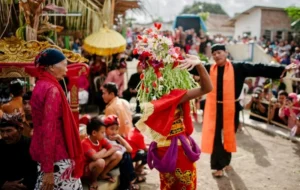




For many Indonesians, the name ‘Banyuwangi’ sparks a sense of mystery and cultural mystique. Located at the easternmost tip of Java, this region has gained national recognition. With its traditional practices designated as part of Indonesia’s Intangible Cultural Heritage.
Among these, the Seblang ritual of the Using people stands out. It is derived from the phrase Sebele Ilang (the disappearance of bad luck). This annual ritual is exclusively practiced in two villages within the Glagah sub-district: Olehsari and Bakungan.
While highly localized, the roots of Seblang are ancient. Some believes they predate the Hindu era, later evolving through the 17th century and the Blambangan Kingdom. Local mythology often centers around Semi, a historical figure who was miraculously cured of an illness and became the first Seblang dancer. These myths elevate the dance from mere performance to a sacred, highly anticipated annual event.
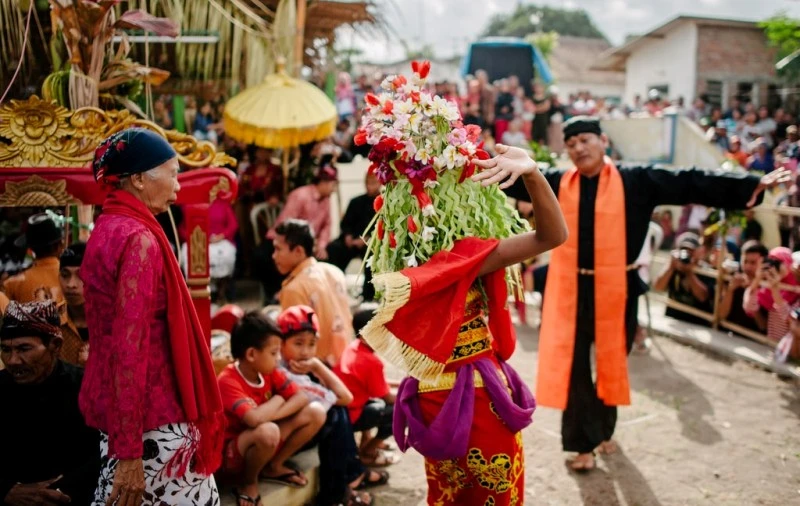
The Seblang ritual blends profound spirituality with communal celebration. Utilizing a lead shaman (Pawang) and traditional Using Gamelan music to guide a dancer into a deep trance possessed by ancestral spirits (Dhanyang) for the ultimate purpose of Tolak Bala—cleansing the village of evil forces, preventing disasters, and ensuring prosperity.
Read More: No Child Should Die of Worms: Poverty, Parenting, and Shared Responsibility
Yet, despite its solemn protective promise and vibrant social atmosphere, the ritual has repeatedly bent under the weight of Indonesian history’s socio-political anxieties. From a mass trance event that caused its temporary abandonment during the political turmoil of the 1960s, to a chaotic late-1980s incident where simultaneous rituals left dancers possessed for days. Seblang has proven to be a heavy spiritual burden rather than light entertainment. This vulnerability culminated in a painful paradox during the tragic violence of 1998 in East Java. The ritual’s spiritual fortifications proved entirely permeable to real-world crises, failing to shield the community from the devastating, human-driven political violence that fractured it from within.
Before the ritual begins, the community meets to select dates based on traditional signs, prepare offerings, and visit ancestral graves—such as the Buyut Ketut shrine in Olehsari—to seek blessings through a communal feast (Selametan). The selection of the dancer is entirely spiritual, guided by ancestral intuition rather than technical skill. However, a strict hereditary rule applies: the dancer must be a descendant of past Seblang dancers.
Read More: I’ll Be Back in Jakarta: Stories of Rural Women Who Move to the City
Interestingly, the two villages maintain a stark contrast in their choice of dancers. One is Seblang Olehsari, which requires a young girl who has not yet reached menstruation (pre-menarche). Another is Seblang Bakungan, requiring an older woman who has passed menopause.
The movements performed during the trance act as a visceral, non-verbal language conveying the core values of the Using community. Rather than arbitrary choreography, each gesture is a dense repository of social and spiritual codes. Take a look at Sapon; a sweeping motion symbolizing the cleansing of physical and spiritual impurities from the village. Or Egol, a hip-shaking movement that serves as a stark reminder against laziness. Also Dhaplang / Ndeplang, outstretched arms signifying a delicate balance between the physical and spiritual worlds. And Celeng Mogok, a stubborn gesture of refusal, symbolizing the communal courage needed to ward off negative influences.
Read More: The ‘Feminine Energy’ Trend is Patriarchy in a Prettier Package
Yet, the physical language of these movements cannot be unlinked from the specific bodies chosen to perform them. The deliberate exclusion of women of reproductive age is a profound cultural statement. By anchoring ritual purity and spiritual receptivity directly to female bodily states that exist outside the menstrual cycle—the pre-menarche young maiden and the post-menopausal elderly woman—the culture isolates these two biological poles as inherently pure, closer to the spirit world, and detached from worldly desires.
This structure places the female body at the absolute center of the village’s spiritual survival. While men take on the supporting infrastructure as shamans and musicians, the critical, heavy burden of mediating with the supernatural is entirely feminized.
Let’s be real: this setup hides a pretty messed-up power dynamic. At the end of the day, a man—the lead shaman—is still pulling all the strings behind the curtain. He’s the one controlling the selection, managing the trance, and deciding exactly what the spirits are saying. It creates this bizarre setup where women are the star attraction, but male authority gets the final word on how they express themselves.
Read More: African Leaders Seeking Justice For Colonial Crimes
To make matters worse, this supposed spiritual honor is actually a massive psychological trap. You don’t get to say no. If a girl tries to turn down the ancestral call, the community believes she’ll be cursed with sudden madness or terrible bad luck. So under the guise of a beautiful, sacred duty, these dancers are completely backed into a corner—their mental health and bodily autonomy held hostage by the ritual’s demands.
When we look closely at Seblang Olehsari, the concept of personal choice gets incredibly messy. Picking a little girl who hasn’t even hit puberty is praised locally as the ultimate spiritual honor. But look at it through a modern lens, and the vibe shifts completely. A child doesn’t have the emotional or legal capacity to sign up for this. Let alone when they are knocked out in a deep, ancestral trance. In this community, the ancestral ‘call’ is an absolute command backed by the terrifying threat of spiritual curses. Personal choice? Non-existent. Individual freedom completely takes a backseat to the village’s collective karma.
Read More: Angry, but Not Free: How Women’s Rage Can Be Turned into Another Form of Control
This throws an incredibly heavy psychological and physical burden onto incredibly young shoulders before these kids even understand ownership over their own bodies. To make it worse, look at the Tundik tradition. The dancer throws her sampur (scarf) into the crowd, forcing whoever it hits to join her. In reality, the crowd is often dominated by eager male audiences who actively vie to be chosen. Their eyes fixed intently on the young dancer’s body as she moves across the stage. The subject is a completely unconscious child to intense public scrutiny and direct physical interaction, completely stripping away any personal boundaries she can consciously enforce.
Such an ethical minefield gets even messier now that internet access and mass tourism have entered the chat. What used to be a deeply private, sacred village event has morphed into a public spectacle splashed across social media and covered by major international documentary outlets. When cameras and tourists swarm the sacred circle, the traditional aura that once shielded a dancer completely evaporates.
Because these dancers—both the little girls and the elderly grandmothers—surrender all physical control the second the trance hits, they are left entirely defenseless. Yet, there are zero actual safeguards to protect them from being physically exploited as exotic entertainment. The community is now stuck facing a brutal modern dilemma: how do you keep a centuries-old spiritual tradition alive when it fundamentally clashes with basic human rights and child protection?
(Editor: Salsabila Putri Pertiwi)
(source: banyuwangiadventure.com)