



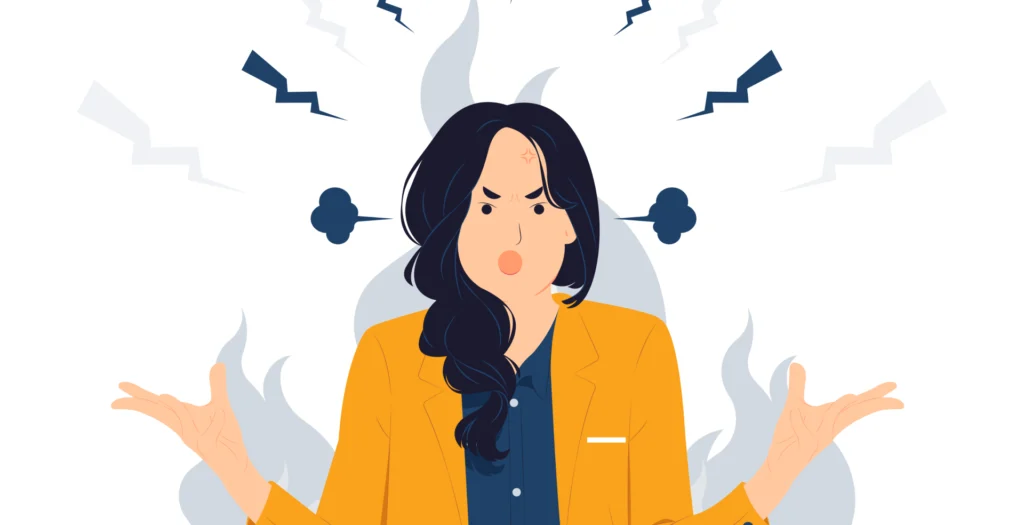
Lately, my Threads feed has been trying very hard to convince me that anger is good for my immune system.
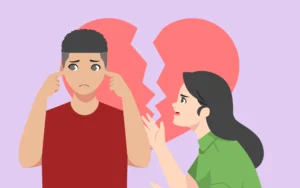
Women need to vent more, the theory goes. Stay angry—cultivate it, feed it, let it sit under your skin—and you might just ward off autoimmune disease.
Going slightly broader to feminism itself, the celebration of women’s rage has undoubtedly opened space for emotions that have long been dismissed, pathologized, or punished. Feminist movements have rightly challenged the expectation that women remain agreeable, accommodating, and emotionally restrained.
There is, however, one awkward detail, particularly about the rage encouragement. Some of this movement is being dispensed by men, even though autoimmune diseases disproportionately affect women, who account for more than 80 percent of cases worldwide.
As someone who has spent the last six years living inside an autoimmune body, I found myself staring at this discourse with a mixture of curiosity and suspicion. Was this genuinely a healthier way to think about emotion? Or had anger simply become another prescription disguised as liberation?
Read More: African Leaders Seeking Justice For Colonial Crimes
Medically, the story is far more complicated than the algorithm allows.
Science does not show that anger protects the body. In fact, studies propose anger can activate stress systems linked to inflammation and immune disruption.
A PubMed study suggests just one minute of intense anger can weaken certain immune responses for up to five hours afterward. Whether experienced directly, anticipated, or simply remembered, anger raises inflammatory activity in the body.
More importantly, the body doesn’t benefit from either extreme. Emotional suppression prolongs stress responses, yet, forcefully discharging anger does not necessarily calm the nervous system either.
One of the most common ways people express anger is through venting: replaying frustrations or repeatedly retelling upsetting experiences to release emotional pressure.
This method helps, sometimes. We feel heard. We feel less alone. Someone confirms that our pain mattered. But venting easily becomes cyclical.
In her research, social psychologist Jennifer Parlamis explains how anger pushes us to identify blame and assign responsibility. But the more we rehearse that blame, the angrier we often become. Stress feeds the body, the body feeds the stress, and eventually the nervous system struggles to return to baseline.
Of course, anger is a useful emotion. It prepares us for action. It can help us protect ourselves, confront injustice, or leave harmful situations.
The problem is that emotionally relieved is not physiologically recovering.
Read More: I’ll Be Back in Jakarta: Stories of Rural Women Who Move to the City
Finding ways to move through anger is crucial before it hardens into chronic stress. Perhaps this narrative spreads so easily because women are exhausted from decades of emotional policing.
In Indonesia, ideals of womanhood were long tied to emotional restraint: patient, agreeable, self-regulating. During the New Order era, this expectation was even institutionalized through organizations like Dharma Wanita, while women seen as politically disruptive were recast as morally dangerous.
So it makes sense that today’s celebration of female anger feels liberating at first. We are finally being told to stop swallowing emotions. To stop shrinking into politeness.
What interests me is how quickly this becomes another prescription. The current conversation does not encourage anger as political consciousness. More often, it encourages anger as emotional output.
But anger should never be an endpoint.
Some feminist scholars caution that simply validating anger does not automatically make it emancipatory. Anger can become a new expectation in itself, creating pressure on women to perform outrage as a marker of political consciousness or authenticity. In this sense, women may find themselves constrained by a different emotional script—one that values visible rage while overlooking other responses such as grief, exhaustion, fear, ambivalence, or the desire for healing.
For Audre Lorde, a writer and feminist thinker, anger was never valuable merely because it was expressed. In The Uses of Anger, she described anger as a response to injustice that carries information—a demand to confront what society has normalized for too long. In this sense, anger is a form of clarity. Something that asks to be interpreted, articulated, and directed toward change.
Read More: The Clock Starts Early and Never Stops: Being a Woman on Society’s Timeline
A society can tolerate anger surprisingly well when that anger remains repetitive, individualized, and emotionally consuming. Outrage becomes visible everywhere, yet little materially changes. In some ways, this is what social media does best: it converts structural distress into endless emotional management.
Instead of asking why so many women are relentlessly overwhelmed—workplace precarity, emotional labor, unequal caregiving burdens, rising economic pressure, productivity culture, online hostility—the burden returns to the individual.
Generate your stress. Express your rage. Vent more. Stay furious.
Empowerment begins sounding like another assignment and what is this if not a form of control?
At some point, the anger detaches from its source. Outrage toward structural problems slowly disperses into ordinary life. A stranger in front of us walking too slowly, a delayed email, a spilled coffee, a mosquito during the commute home.
Until finally, we forget what we were angry about in the first place.
Moreover, contemporary culture often celebrates women’s anger only when it can be safely consumed. Expressions of rage are turned into viral content, branding strategies, entertainment, or individual acts of self-expression. While the structural conditions that produce that anger remain intact.
Feminist critiques of neoliberalism point out that emotions can be commodified in ways that make resistance appear empowering without threatening existing relations of power. Anger becomes something to be displayed rather than organized, witnessed rather than translated into collective political action. As a result, women may be encouraged to feel powerful without necessarily gaining greater power over the institutions that shape their lives.
Read More: Learning Peace from a Small Hamlet in Temanggung, We Call It Nyadran Perdamaian
Maybe this is also why this essay took me almost a month to finish. I was busy—guess what—venting. At my own body. For not having the energy to sustain the kind of “healthy lifestyle” it is constantly measured against.
On the days I manage to get up, lift a 6-kilogram dumbbell, push through a few rounds of squats, attempt light Pilates, it feels like progress until my body shuts down again for the next two weeks. A cycle I am still learning to live with.
It’s harder to pretend the anger belongs only to me. It surfaces in the small, repeated negotiations with other people too.
In the questions about how I look, the quiet suspicion that I am not taking care of myself properly, the assumptions that I am chasing the wrong kind of thinness or following some toxic trend.
The anger, then, is not just emotional. It is relational. It is social. And the truth is, I’m tired.
I am living proof that the body does not need women to swallow anger until it calcifies into illness. But neither does it need them to explode endlessly for the sake of their T-cells. What both the body requires is a relationship with anger that is neither fearful nor worshipful.
Anger is not a personality. Definitely not a wellness strategy. Not transformation on its own. It’s meant to be metabolized, understood, directed, and translated into action that reaches beyond the self.
That is harder than venting. Slower than outrage. Far less satisfying than a viral post. But it may be the only path that prevents anger from dissolving into background noise.