



Before the 1965 femicide-genocide occurred, the women’s movement was characterized by militancy, autonomy, and a highly dynamic diversity. The Indonesian Women’s Movement (Gerwani), which grew out of the Aware Women’s Movement (Gerwis) founded in 1950, developed into one of the largest and most organized women’s mass organizations, even on the international stage.
By the mid-1960s, Gerwani’s membership had surged to over 1.7 million people, spread from urban areas to the remotest rural corners throughout the archipelago.
That situation changed drastically after the events of September 30, 1965. Amid a political crisis and a power struggle, the military under Major General Suharto assumed a pivotal role in controlling information and shaping the narrative surrounding those events.
At the same time, Suharto transitioned from his role as Commander of Kostrad to becoming a central figure in the power takeover. It was from the 1965 political crisis that the process leading to his eventual presidency began. The women’s movement was dismantled, in tandem with the establishment of a new political structure under military control.
These changes also altered the state’s view of women as spouses, homemakers, and guardians of family morality.
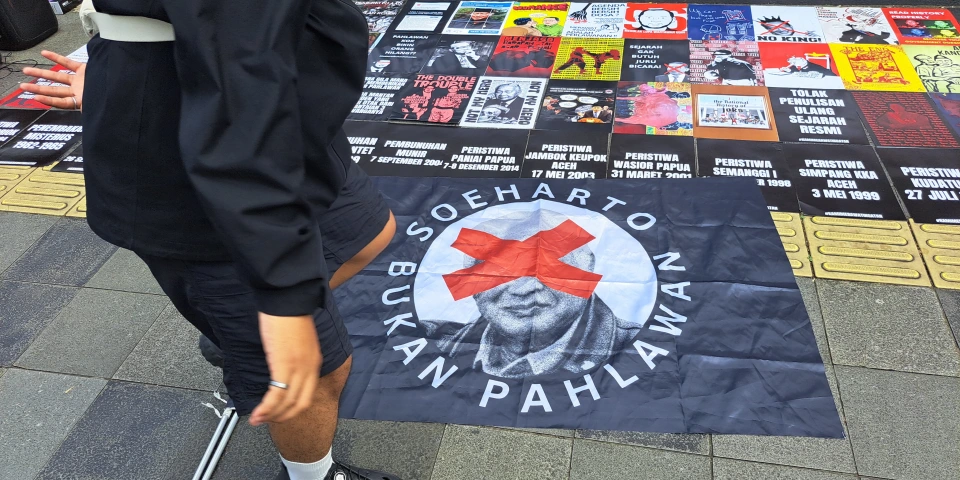
Sixty years later, President Prabowo issued Presidential Decree No. 116/TK/2025, conferring the title of National Hero on the figure behind the New Order, who was also his father-in-law. This decision was subsequently challenged in the Jakarta Administrative Court by a coalition of civil society groups known as the Movement for the Prosecution of Suharto (GEMAS).
During the hearing on September 28, 2026, witnesses supporting the victims, Usman Hamid and Ita Fatia Nadia, one of whom testified regarding Soeharto’s “crimes” in a series of human rights violations and the suppression of the women’s movement after 1965.
Gerwani and Women’s Politics Before 1965
Gerwani never limited its activities to the domestic sphere alone; the organization consciously linked gender injustice to structures of class inequality, economic exploitation, and anti-imperialist ideals.
Gerwani’s primary agenda focused on concrete actions that addressed the root causes of the problems faced by working-class women. In rural areas, Gerwani cadres were at the forefront of supporting the implementation of the Agrarian Reform Law (UUPA 1960), defending land rights for women farmers, and organizing campaigns to cancel the crippling debts imposed by landlords.
In addition, Gerwani pioneered efforts to eradicate illiteracy, organized political and economic skills training courses, and established a network of kindergartens (TK Melati) to care for the children of working-class women and peasant women while they were at work.
Meanwhile, in the realm of family law, Gerwani took a firm stance against child marriage, fought against forced marriage, and demanded legal protection for women against domestic violence. The activism of the pre-1965 women’s movement was also deeply rooted in the defense of the rights of female workers facing structural exploitation.
Research by Saskia Eleonora Wieringa, which began in 1977 on female batik workers in Surakarta, revealed how the issues that concerned Gerwani before 1965 had remained virtually unchanged. Their working conditions during the New Order era were still similar to those documented by the Dutch colonial government as early as the 1930s.
Before 1965, Gerwani studied the lives of batik workers to formulate demands for fairer wages and better working conditions. That research and advocacy came to a halt after the events of 1965, when Gerwani was dismantled and women’s organizations were disbanded or forced to change.
Read more: The Voices of Suicide Survivors: Surviving, Recovering, and Rebuilding Their Lives
For her research, Saskia spent a year in Solo. She hopes the findings can be used by women’s organizations to assist batik workers facing difficult working conditions. She also brought photographs from colonial government reports from the 1930s to show the workers she met.
“I also know that the Gerwani women’s organization had already begun researching this situation before 1965. When I researched the situation of batik workers and showed them those photos from the 1930s, they couldn’t believe it. How could the situation from the 1930s be exactly the same as their current situation?” explained Saskia from The Hague via video conference during a discussion marking the reissue of her book, *Kuntilanak Wangi/The Perfumed Nightmare*, on Wednesday (September 23).
The internal dynamics of the pre-1965 women’s movement were also marked by open ideological debates and a critical stance toward those in power, including in response to the issue of polygamy.
The Indonesian Republican Women’s Union (Perwari), under the leadership of Sujatin Kartowijono, took a hardline stance against President Sukarno’s decision to marry Hartini in 1954.
Perwari organized mass demonstrations and refused to compromise in the name of fair marriage laws. On the other hand, Gerwani navigated the issue of polygamy in a more complex manner due to its political ties within the Guided Democracy axis.
According to Saskia, although Gerwani was reluctant to openly criticize Soekarno in order to maintain a strategic anti-imperialist alliance, within the ranks of left-wing civil and cultural organizations, Gerwani cadres took an uncompromising stance.
Read more: “We Packed Their Lunches, We’re Traumatized”: Stories from Parents of Children Poisoned by the Free Nutritious Meals Program in Karo
Saskia cited the example of how Gerwani actively took action against and demanded the dismissal of Sudjojono, a renowned painter at the People’s Cultural Institute (Lekra), from the organization’s leadership for taking a second wife.
“For example, at Lekra, there was the painter Sudjojono, who was a very important and well-known chairman due to his exceptional work. He also took a second wife, a much younger woman. Gerwani was very active in opposing this until he was eventually expelled. Therefore, whenever they had the space to fight, they did so internally,” said Saskia.
The existence of the Indonesian women’s movement prior to 1965 was widely recognized on the international stage through the networks of the Women’s International Democratic Federation (WIDF) and the Indonesian Women’s Congress (Kowani).
Historian Ita Fatia Nadia noted figures such as Hurustiati Subandrio, who represented the aspirations of Indonesian anti-colonial feminism at various global conferences. She also mentions Setiati Surasto, a female labor thinker who was tasked with drafting a comparison of workers’ wages at the Asian-African Labor Conference and who founded the Central Women’s Bureau of the All-Indonesia Labor Organization (SOBSI) in 1962. Her aim was to oversee the ratification of ILO Convention No. 100 on equal pay.
Another revolutionary figure Ita mentioned was Francisca Fanggidaej, a female diplomat who traveled the world advocating for Indonesia’s independence and the rights of the people of Asia and Africa; her archives are now housed at the International Institute of Social History (IISG) in Amsterdam. Overall, Ita Fatia Nadia emphasized the immense value of the legacy of internationalism championed by these pre-1965 women activists.
“Internationalism is not merely a matter of representing one’s country, but rather a political platform of the progressive left.”
Read more: Why “I am Jane Doe” Matters: the Cornell University Case is an Urgent Alarm to Take Sexual Violence Seriously
“If we read Francisca’s letters, we can see how deeply feminist she was, even though she didn’t use the term ‘feminist.’ What’s interesting is how internationalism became their political platform,” Ita emphasized.
A high degree of autonomy and democratic governance was also evident in other pre-1965 women’s organizations. For example, Bhayangkari, an organization of police officers’ wives founded in 1949, operated prior to 1965 as an independent institution whose leadership was democratically elected through internal elections.
The position of national chairperson of Bhayangkari at that time was not automatically held by the wife of the National Police Chief, but rather by the member deemed most competent, including female police officers (Polwan). Bhayangkari’s primary focus during that period was advocating for equal pay, career training rights, and guaranteed menstrual leave for women.
This diversity and independence were also reflected in the Kowani federation. Before the political purge of 1965, Kowani brought together various women’s organizations with diverse ideological backgrounds, ranging from nationalist and religious groups to left-wing organizations.
Within this federation, dual membership was commonplace, and decisions were made through debates that respected the autonomy of each entity. Women were valued as independent citizens with full political citizenship.
The success of the pre-1965 women’s movement in fostering critical awareness among the working class, peasants, and the educated elite made them a political force to be reckoned with/ and feared by conservative and military factions. When the political crisis reached its peak in 1965, this independent women’s movement became one of the primary targets that had to be completely destroyed in order to facilitate the transfer of power and the establishment of a new regime.
Sexual Hysteria, the Ghost of Gerwani, and Femicide
The turning point in the destruction of the women’s movement occurred immediately after September 30, 1965. The military, under the command of Major General Soeharto, who served as Commander of the Army Strategic Reserve Command (Kostrad) engineered a consolidation of power by launching a highly orchestrated campaign of psychological warfare and information control. The first step in controlling public discourse began with the issuance of a military directive restricting the press.
On October 1, 1965, the Commander of Kodam V/Jaya, Major General Umar Wirahadikusumah, issued Order No. 1/10/1965, which prohibited all daily newspapers in Jakarta from publishing or broadcasting news regarding the September 30th Incident, with the exception of two print media outlets fully controlled by the Army: Angkatan Bersenjata and Berita Yudha. Ita Fatia Nadia explained the significance of this document, which served as the catalyst for propaganda:
“The issuance of Order No. 1/10/1965 by Major General Umar Wirahadikusumah, in his capacity as Commander of the Jaya Military Command, was an order to prohibit all daily newspapers in the capital from publishing news about the September 30th Incident, with the exception of two media outlets that were granted permission: Angkatan Bersenjata and Berita Yudha. “So, there was a campaign to discredit women; it claimed that Gerwani was all sorts of things, that Gerwani was the devil and that they were extremely dangerous,” explained Ita.
Through this media monopoly, the military fabricated a singular narrative, one that was highly sexualized and dehumanizing regarding the events that took place at Lubang Buaya. Gerwani and female members of Pemuda Rakyat were accused of performing nude dances (Tari Telanjang), holding orgies under the influence of drugs, and carrying out sadistic acts of torture, including castration and gouging out the eyes against the kidnapped generals. This narrative was aggressively disseminated to incite public outrage.
Read more: Enduring Heat and Tides: A Fisher Family in Muara Angke Faces the Giant Sea Wall and Eviction
To reinforce this fabrication, on October 7, 1965, the military media released fabricated testimonies from two young women who had been arrested in the Senen area. Ita Fatia Nadia revealed that the two women (who, under intimidation, claimed to be named Djamilah and Sainah) were in fact sex workers who had been forced to confess to being members of Gerwani involved in the “Tarian Harum Bunga” while mutilating the bodies of military officers.
“On October 7, the daily newspapers Angkatan Bersenjata and Berita Yudha featured two young women, who were actually sex workers in Senen to claim they were Gerwani members and recount that they had committed acts of torture. So, these two sex workers were asked to testify and claim they were Gerwani members. Then a narrative was fabricated as if people were dancing at Lubang Buaya.”
“This campaign and agitation framed Gerwani as a brutal PKI group that mutilated generals, and even filmed them as if they were performing a striptease on the generals’ bodies.”
The propaganda regarding sexual violence at Lubang Buaya itself was a fabrication that contradicted the forensic evidence.
The official Visum et Repertum report, conducted by a team of forensic doctors led by Dr. Rubiono Kertopati from the Army Hospital on Suharto’s orders on October 5, 1965, concluded that all the bodies of the high-ranking officers were intact. The primary causes of death were gunshot wounds and blunt-force trauma, with no signs of genital mutilation or eye gouging.
The fabrication of the “Lubang Buaya” myth triggered the greatest outbreak of sexual moral panic in Indonesia, fueling the anger of religious and anti-communist groups.
Read more: Mothers and Children Trapped in Heat Along the Rail Tracks: How Kampung Muka Adapts, Rebuilds, and Cools
According to Saskia, this myth shifted public perception: Gerwani, a women’s movement fighting for civil and economic rights was transformed into a monster of devil-worshippers, sexual deviants, and a threat to national morality. She argues that this stigma continues to be perpetuated to this day.
“That was the first time I heard stories about the vile slander and lies regarding Lubang Buaya directed at Gerwani. Later, I realized that this was the first sexual moral panic. The historical lies about Lubang Buaya are still believed today, and the aura of perverted sexuality still lingers in society. Many contemporary women’s rights activists who are genuinely fighting for rights related to sexuality and marriage are, in fact, stigmatized as the ‘New Gerwani,’” explained Saskia.
Legal and institutional measures to crush the independent women’s movement soon followed. On October 29, 1965, Kowani officially expelled Gerwani from its membership. This expulsion was followed by the removal of Hurustiati Subandrio from her leadership position at Kowani in March 1966. This move marked the end of the autonomy of women’s federations in Indonesia and the beginning of an era of standardization under military control.
A massive purge of members of Gerwani, Pemuda Rakyat, BTI, and the PKI took place after the Command for the Restoration of Security and Order (Kopkamtib) was established.
Under the command of Brigadier General Sarwo Edhie Wibowo and RPKAD troops, mass manhunts and arrests were carried out even in the remotest villages. It is estimated that 500,000 to one million people were killed in the mass killings of 1965–1966.
Read more: “Where’s Your Headscarf?”: Misogynistic Rules Run Rampant, Women’s Bodies Continue to Be Regulated
Ita Fatia Nadia’s field research in Pacitan in 2024 uncovered physical evidence of the killings of Gerwani cadres. In the remote forest of , Ita reported discovering two old wells that were used as sites for the extrajudicial killings of seven female Gerwani members who had been arrested while working in the fields.
Meanwhile, in Madiun, a local Gerwani chairperson was arrested, killed, and her body was buried in a shallow grave right in front of a police post; for three consecutive days, the police officers on duty were forced to urinate on the burial site.
“During my research in Pacitan in 2024, a land clearer led me into a dense forest and showed me two wells. One of the wells was used to hold Gerwani members who had been arrested while farming. Meanwhile, in Madiun, a local Gerwani leader was arrested, killed, and buried in a shallow grave right in front of the police post (Angkobin). Every police officer handling the case was required to urinate on that area for three days. Because, in their view, Gerwani members were evil and had to be eliminated,” Ita recounted.
The dehumanization of women in politics during the 1965 Tragedy focused specifically on the destruction of their sexual dignity. Ita Fatia Nadia emphasized that the mistreatment of women has specific characteristics that distinguish it from the dehumanization of men.
“Demonization is a political process and a form of representation that constructs individuals or women as dangerous figures; their bodies and sexuality are deemed dangerous because they are accused of deviance. Women involved in politics are considered deviant, so women’s position as political subjects must be delegitimized. The first thing targeted in the dehumanization of women is their sexuality.”
The Plantungan Camp as a Laboratory of State Maternalism
The mass arrests following 1965 led to the long-term detention without trial of thousands of women. After passing through temporary detention centers such as Bukit Duri Prison in Jakarta or Bulu Prison in Semarang, the New Order military government saw the need for a special long-term detention facility to isolate female activists deemed to hold radical ideologies.
Based on a military decision by the Commander of Kodam VII/Diponegoro, the Plantungan Political Detention Camp was established in April 1971 in the Kendal region of Central Java.
The camp utilized a former Dutch colonial-era leprosy hospital complex, isolated in a valley surrounded by hills. Operating until December 1979, the Plantungan Camp held approximately 500 female political prisoners (tapol) classified as Group B, in accordance with Cabinet Presidium Instruction No. 13/Kogam/7/1966.
Plantungan Camp was designed not only as a place of exile for Gerwani women or those considered affiliated with Gerwani and the PKI. The camp also served as an ideological and cultural “laboratory” to reshape, discipline, and subjugate political women so they would return to state-controlled patriarchal norms.
Ita Fatia Nadia asserts that Plantungan was an experimental space for reshaping women’s identities, the results of which were later applied more broadly to Indonesian women through state organizations during the New Order era.
“Plantungan wasn’t just a camp; it was a means of disciplining women’s sexuality and bodies so that they could help the state formulate Dharma Wanita. So, Dharma Wanita’s laboratory was at Plantungan. It was part of the effort to destroy the political ideas held by the detainees.”
Ita explained that the layout of the Plantungan Camp was divided into six large blocks surrounded by multiple layers of barbed wire and strictly guarded by soldiers from the Diponegoro Military Command’s Infantry Battalion.
Read more: Feminist Dictionary: A Critique of Choice Feminism—Women’s “Choices” Are Not Merely Personal Consequences
Within the camp, there was a hierarchical system of detention; prisoners considered the most radical or those who refused to submit were placed in “small units.” In these small units, the women experienced double isolation and were subjected to labor exploitation and sexual violence by the camp guards.
Every morning, female political prisoners were required to perform a ritual of bodily discipline. They were forced to wear traditional kebaya blouses and jarik sarongs, line up neatly in the camp courtyard, salute the flag, recite the Pancasila, and sing national anthems under the watchful eye of soldiers armed with bayonets.
Ita argues that the daily enforcement of kebaya wear within the confines of a poorly equipped detention facility constitutes a symbolic stripping of their status as political actors and a forced transformation of them into figures of “traditional Javanese women” as submissive, demure, and powerless.
Gender-based violence at Plantungan Camp occurred in a structured manner amid a climate of entrenched military impunity. Female political prisoners were forced to perform heavy physical labor, ranging from clearing forests and tilling rice fields to attending to the domestic and personal needs of the supervising officers.
A number of studies on women’s experiences in post-1965 political detention document sexual violence as part of a repressive mechanism that supports Ita’s argument. Annie Pohlman, through interviews with survivors, uncovered testimonies of rape, sexual coercion, forced labor, as well as pregnancies and the removal of children from detained women.
In her study of Plantungan, Pohlman also recorded testimonies from women who were forced to work for the military before experiencing sexual violence.
Ita views the methods of physical abuse endured by Gerwani cadres before their transfer to Plantungan as a form of dehumanization that goes beyond all reason.
Read more: After the Days of Hell in Jakarta: The Death of Ita Martadinata as Recalled by Ita Fatia Nadia
Based on 26 oral history documents collected by Ita Fatia Nadia, including testimonies from Gerwani figures such as Sulami, the former Secretary-General of Gerwani, and Sudjinah, a journalist active within Gerwani there are accounts detailing the use of instruments in acts of violence and during interrogations of detained women.
In one of the testimonies presented by Ita, Sudjinah recounted the sexual violence she endured, which involved the use of instruments.
“I found 26 oral history interview documents, specifically from survivors of sexual violence. It is evident how the dehumanization of women differs from that of men, as sexuality is the primary target. Mrs. Sudjinah’s X-ray results showed a fracture in her hip bone caused by repeated rapes that did not involve a man’s genitalia, but rather the use of metal,” said Ita.
Other survivors, such as Sarbinatun, who was arrested at a young age and transferred from Semarang to Plantungan in 1971 endured repeated sexual violence for years until she suffered from severe depression and attempted suicide inside the camp in 1975.
Despite being in a highly oppressive situation, the female political prisoners in Plantungan developed coping mechanisms to maintain solidarity and mental health.
The women organized sports activities, theater performances, singing groups, and even self-administered medical care using medicinal plants. They secretly composed songs of resistance and longing for their families. These collective efforts thwarted the camp administrators’ tactics of disorientation and enabled the majority of them to survive until the camp was dissolved in late 1979 due to international pressure.
The dissolution of the Plantungan Camp in December 1979 marked the end of physical detention, but the stigma of being “former political prisoners” and the erosion of civil rights continued to haunt the survivors and their descendants for many years afterward.
The New Fujinkai and the Domestication of Women Under the New Order
The success in subduing the women’s movement at Plantungan Camp and other detention facilities laid the foundation for the New Order regime to construct a new state gender ideology.
This ideology has been formulated by researchers as “State Motherism” (Ibuisme Negara), a discursive construction that defines the essential role of Indonesian women solely as spouses, homemakers, educators of the next generation, and guardians of national morality, while stripping them of their political autonomy.
The state assumed the authority to dictate women’s bodies, occupations, families, and political orientations in order to ensure stability and consolidate President Suharto’s power.
The architecture of State Maternalism was institutionalized through the establishment of state-sponsored women’s organizations that were mandatory, hierarchical, and bureaucratic.
These organizations included the Women’s Division of the Indonesian Civil Service Corps, which later became Dharma Wanita (founded in 1974 for the wives of civil servants); the Family Welfare Development (PKK, structured down to the RT/RW level); and Dharma Pertiwi (for the wives of members of the Armed Forces).
A key characteristic of these state-run organizations was the application of the ex-officio principle: the leadership structure of women’s organizations was automatically determined by the political or bureaucratic positions and ranks held by their husbands. The wife of a minister or governor automatically became the chairperson of Dharma Wanita at the national or provincial level, regardless of the woman’s personal qualifications or preferences.
Saskia Wieringa highlights that this pattern of women’s leadership and organization during the New Order era severed the traditions of the pre-1965 women’s movement and mimicked the fascist Fujinkai structure implemented by the Japanese military occupation government in the 1940s. Saskia Wieringa compares this shift in leadership patterns:
Read more: I’ll Be Back in Jakarta: Stories of Rural Women Who Move to the City
“The leadership and organizational patterns after 1965 were almost identical to those of women’s organizations during the Japanese occupation (Fujinkai), a fascist model and pattern. I believe that fascist pattern still exists today,” Saskia asserted.
These state organizations functioned as networks for social surveillance and political mobilization to prop up the Golongan Karya (Golkar) power structure and the New Order bureaucracy of that era.
Through the PKK and Dharma Wanita structures, the state penetrates even the most private spheres of family life: regulating family size through the Family Planning (KB) program, setting societal moral standards, and ensuring that wives keep their husbands in line so they remain loyal to the regime. Saskia Wieringa recounts her experience of bringing labor issues to the country’s women’s organizations.
“I was very concerned to see that there was no change or improvement in the situation. I attended meetings of the PKK, Dharma Wanita, KOWANI, and even Perwari to speak out about the plight of female workers and ask for their help as women’s organizations. There used to be a very progressive women’s movement before 1965, but after that, it all fell apart. At that time, I couldn’t find a single organization that was interested in or brave enough to fight for the rights of female workers,” Saskia said sadly.
In this context, women were transformed from active political subjects into passive agents of the state’s ideological homogenization. This depoliticization eliminated channels of resistance for exploited female workers and peasant women.
The patterns of depoliticization and gender-based violence developed during the Gerwani crackdown did not end with the events of 1965–1966, but were periodically reproduced by the military in areas of armed conflict throughout the New Order era. Ita Fatia Nadia underscored the continuity of these military methods of violence.
Read more: Indonesia’s Garbage Crisis: The Irony of Women Amid the Stench of Garbage
“This process of destroying women’s sexuality was reproduced during the events of 1998, in Aceh, East Timor, Papua, and in the case of Marsinah. Women’s sexuality is positioned as an enemy deemed extremely dangerous. This method of destroying the women’s movement through the destruction of women’s bodies has been periodically reproduced by militarism,” declared Ita.
Saskia also accused the stigmatization of the “New Gerwani” discourse of being used as a weapon to silence any critical articulation from the modern women’s movement.
Whenever women’s organizations demand the right to bodily autonomy, resistance to sexual violence, or marriage law reform, they are accused of spreading immorality that threatens national unity. Saskia sees this pattern in the persecution of the LGBT community from 2015 to the present.
“The smear campaigns created by Suharto were not only used to slander progressive women but also vulnerable groups such as the LGBT community in 2015, following a pattern nearly identical to that of 1965. The New Order was born out of slander against Gerwani. As a result, every independent, progressive movement, whether concerning women’s bodies, women’s autonomy, or marriage law reform has always been overshadowed by the New Order’s pattern of slander.”
The militarization of civilian life did not end with the fall of the New Order. Its legacy can be seen in the widespread penetration of military perspectives and practices into civilian life, including in matters previously considered the domain of the family and the community.
Saskia Wieringa views this trend as a serious issue because militarization involves not only the presence of the military within state institutions but also who is granted the authority to regulate daily life. She cites examples of current government programs, such as the Free Nutritious Meals (MBG) program, which is administered by the military.
Read more: Indonesia’s Garbage Emergency: Scavengers Buried Under Mountains of Garbage in Bantar Gebang
“Now we see the militarization of society happening everywhere. I always say with a cynical laugh that the division of labor within the household remains extremely unequal. Women work outside the home, but all domestic work still falls on women. Through the school lunch program for children, it is actually the military that is stepping in. That is where the militarization of society becomes even more entrenched,” said Saskia.
According to Saskia, this issue is also linked to women’s political space. As social functions and decision-making are increasingly framed within a military framework, women’s experiences, knowledge, and authority are inevitably marginalized.
“An important lesson from Indonesian and international history is this: under military control, there is virtually no space for women,” she said.
From this perspective, the history of the destruction of the women’s movement cannot be separated from the broader political project of the New Order, which served as the foundation for Suharto’s 32-year rule.
Femicide, the stigmatization of Gerwani, and the restructuring of women’s roles in both domestic and public spheres all contributed to the narrowing of women’s political space. Both Saskia and Ita agree that this injustice did not end in 1965, 1998, or even today
Challenging Suharto’s Title as National Hero
More than 60 years have passed since the 1965 tragedy. The Dialita Choir, founded by female survivors and descendants of the 1965 victims, continues to perform the songs composed by political prisoners behind bars. In various regions, families of the victims have also been re-marking mass graves and execution wells.
However, this struggle over collective memory hit a wall of state impunity when, on November 6, 2025, the President of the Republic of Indonesia issued Presidential Decree (Keppres) No. 116/TK/2025, conferring the title of National Hero upon former President Suharto.
The conferral sparked fierce protests from a civil society coalition, the Movement for the Prosecution of Suharto (GEMAS). They argued that the decision insulted the victims of crimes against humanity, whitewashed the history of authoritarianism, and violated the criteria for national heroes set forth in Law No. 20 of 2009.
In a May 1, 2026, press release, the GEMAS advocacy team outlined the four main grounds for their lawsuit. First, the conferral of this title contradicts Law No. 30 of 2014 on Government Administration, specifically Article 7(1), Article 7(2), and Article 8(2), which explicitly state that the administration of government must be based on the principle of legality, the principle of human rights protection, and the general principles of good governance.
Second, the decision violates Law No. 20 of 2009 on Titles, Medals of Merit, and Honors. Article 1 of the Law on Titles, Medals of Merit, and Honors (GTK) defines a National Hero as a title awarded to a citizen who, during their lifetime, performed heroic acts or achieved extraordinary accomplishments for the nation and state.
Read more: 2025 Year-End Edition: Women’s Resistance in the Season of Arrests and the Year of #DemocracyApocalypse
GEMAS assesses that under Suharto’s command, millions of lives were rendered meaningless at the hands of state apparatus, and his position as Indonesia’s top leader actually paved the way for the creation of a policy system characterized by violence, destruction, exploitation, and the seizure of living spaces. The objectification, subjugation, and oppression of women were institutionalized by Suharto within the state system and its actions. GEMAS also asserts that Suharto lacks the moral integrity and exemplary character required by Article 25(b) of the GTK Law.
Third, the conferral of this title contradicts Law No. 28 of 1999 on Clean and Corruption-, Collusion-, and Nepotism-Free State Officials. GEMAS notes that the practices of corruption, collusion, and nepotism (KKN) during the Soeharto era have been officially acknowledged by the post-Reform era state through MPR Decree No. XI/MPR/1998, which explicitly identifies Soeharto as a party who must be held accountable.
The Supreme Court of the Republic of Indonesia, through Decision No. 140 PK/Pdt/2015, has also ruled that Soeharto’s Supersemar Foundation committed unlawful acts and ordered it to reimburse the state for financial losses totaling USD 315,002,183 and Rp 139,438,536,678.56. The 2007 Stolen Asset Recovery (StAR) Report, released by the UNODC in collaboration with the World Bank, even identified Suharto as the most corrupt leader in the world in the 20th century, with estimated assets derived from corruption ranging from 15 to 35 billion U.S. dollars.
Read more: 2025 Year-End Edition: A Season of Persecution Without Transition in the Age of #DemocracyApocalypse
Fourth, the conferral of this title violates Law No. 39 of 1999 on Human Rights and Law No. 26 of 2000 on the Human Rights Court. The National Commission on Human Rights (Komnas HAM) has documented at least nine cases of gross human rights violations that occurred under Suharto’s leadership (1965–1998), including the Events of 1965–1966, the Mysterious Shootings (1982–1985), Tanjung Priok (1984), Talangsari (1989), Rumoh Geudong and Pos Sattis (1989–1998), Enforced Disappearances (1997–1998), Trisakti and the “ ” at Semanggi (1998–1999), May 1998, and the Killings of “Black Magic” Practitioners (1998–1999).
GEMAS believes that awarding Soeharto the title of “hero” significantly hinders the resolution of cases involving gross human rights violations, particularly those in which he was directly involved and can be interpreted as an act of obstruction of justice.
GEMAS’s press release also highlights alleged conflicts of interest surrounding the award. President Prabowo Subianto was once Soeharto’s son-in-law, and during the 2014 presidential campaign, he made a political pledge to designate Soeharto as a National Hero. The Golkar Party, a legacy party of the New Order era, has also consistently pushed this agenda since 2008, while Soeharto’s biological daughter, Titiek Soeharto, who is close to Prabowo currently serves as a member of the House of Representatives. GEMAS emphasizes that a government official is obligated to act in accordance with the principle of impartiality, as stipulated in Article 42(1) of the Government Administration Law.
Furthermore, GEMAS believes that conferring the title of “national hero” on Suharto constitutes a re-victimization of the victims. Presidential Decree No. 116/TK/2025 inflicts repeated trauma on the victims or their families, who have yet to receive justice, even though the state has an obligation to ensure that victims receive special attention and care to prevent the recurrence of trauma.
Read more: Stop Tech Misogyny: The Long Chain of Gender-Based Cyber Attacks and Disinformation
Previously, on December 9, 2025, GEMAS filed an administrative objection with the President through the Ministry of the State Secretariat, followed by an administrative appeal on December 23, 2025. No response was received by the deadline set by the Law on Administrative Governance. A lawsuit was then filed with the Jakarta Administrative Court (PTUN) to annul Presidential Decree No. 116/TK/2025 insofar as it pertained to Soeharto, and to compel the President to revoke the decree.
During the hearing on Monday (September 28), which focused on witness testimony, the panel of judges heard testimony from two witnesses supporting the victim: Usman Hamid, Executive Director of Amnesty International Indonesia and a former KontraS activist; and Ita Fatia Nadia, an oral history researcher and former Commissioner of the National Commission on Violence Against Women (Komnas Perempuan).
In his sworn testimony, Usman Hamid presented the findings of legal investigations and research conducted by KontraS, as well as a study by the National Human Rights Commission (Komnas HAM) regarding Suharto’s direct involvement in dozens of incidents of gross human rights violations in Indonesia. Usman Hamid emphasized the legal basis for command responsibility as stipulated in Article 42 of Law No. 26 of 2000 on Human Rights Courts.
The mass deportation without due process to Buru Island, which involved at least 10,000 political prisoners; the 1984 Tanjung Priok Incident; and the disregard for MPR Decree No. XI/MPR/1998 and MPR Decree No. VII/MPR/1998 were also central to the trial. This testimony confirms that Suharto does not meet the normative requirements of Law No. 20/2009, which mandates that candidates for National Hero status must have a track record of never having committed reprehensible acts and never having betrayed humanitarian ideals.
Read more: Stop Tech Misogyny: When AI Becomes a Tool for Manipulating Women’s Bodies
“Based on KontraS’s in-depth research, we conclude that various human rights violations occurred, resulting in arbitrary arrests, enforced disappearances, torture, and extrajudicial killings. We have detailed all these facts in a report grounded in the framework of humanitarian law and international law. One of the provisions linking President Suharto’s command responsibility is Article 42 of Law No. 26 of 2000 on Human Rights Courts. “The National Commission on Human Rights’ (Komnas HAM) 2003 investigation also concluded that gross human rights violations had occurred involving state officials through acts of arrest, torture, and imprisonment without due process,” Usman Hamid stated before the Administrative Court (PTUN) panel of judges on Monday (September 28).
Subsequently, Ita Fatia Nadia provided testimony focusing on the findings of official investigations by Komnas HAM and the National Commission on Violence Against Women (Komnas Perempuan) regarding the systematic suppression of the women’s movement and gender-based crimes.
In her testimony at the Jakarta Administrative Court, Ita submitted evidence in the form of official state policy documents, military command decrees, and the findings of Dr. Rubiono Kertopati’s forensic autopsy verification, which debunked the Lubang Buaya slander myth.
Read more: Stop Tech Misogyny: Misinformation on Social Media Used to Trap Victims of Human Trafficking
“At that time, I was appointed by Komnas HAM to lead the team investigating the 1965 cases, specifically conducting oral history research on Gerwani members who experienced widespread violence. I collected interviews from 26 Gerwani cadres who had been detained in prisons in Bukit Duri, Bali, Central Java, Yogyakarta, and even Aceh. One of the key documents I discovered was an order from the Commander of the Jaya Military Command, Major General Umar Wirahadikusumah, to arrest Gerwani members on charges of torturing generals at Lubang Buaya. This accusation directly contradicts the official autopsy report by Dr. Rubiono Kertopati from the Army Hospital, which stated that there was no genital mutilation or sadistic torture on the bodies of the officers.”
“Soeharto’s position at the time of the mass killings and torture that occurred between 1965 and 1966 was as Commander of Kostrad and Head of Pangkopkamtib. Through Pangkopkamtib decision letters, it was stated that the ‘purge’ of communist elements was carried out on the orders of the leadership. “Based on these facts of crimes against humanity, we reject the conferral of the title of national hero,” Ita explained at length before the panel of judges at the Administrative Court (PTUN).
This Jakarta Administrative Court hearing highlighted a clear clash between the state’s official historical narrative and the oral histories and archival records of the victims. Five days before the hearing, Ita Nadia also criticized the project to revise Indonesia’s National History, which she believed had the potential to obscure the facts of the New Order’s crimes:
Read more: Prabowo-Gibran’s One-Year Report Card From A Gender Perspective
“Yesterday, during a workshop, we analyzed how the draft history narrative initiated by Fadli Zon contains manipulations and omits many important historical facts,” she said.
This struggle over historical memory, according to Saskia Wieringa, must also be accompanied by the strengthening of the women’s movement. She believes that the resurgence of authoritarianism requires organizations capable of linking women’s struggles to broader issues of democracy and political rights.
Therefore, she advocates for a new women’s movement that draws lessons from Gerwani’s experience but is built in a way that fits the context of today.
“Feminist voices are currently lacking, and we need an organization like Gerwani in a modern form that meets the demands of our time. The struggle for women’s rights cannot stand alone; rather, it must be connected to broader political rights. We must unite under a progressive platform through what I call ‘politics of affinity,” she explained.
Read more: Arrests at the End of the Day: Arrested While Hanging Out, Allegations of Sexual Harassment
For this reason, Ita views the lawsuit challenging the conferral of the title of National Hero on Suharto as more than just an administrative matter regarding a title. The lawsuit reopens questions about how the state remembers past political violence, whose voices are included in official history, and what happens when someone associated with a regime that crushed the women’s movement is instead placed among the ranks of national heroes.
From the perspective of women who have long preserved the memories of the victims, the courtroom becomes one arena for reexamining these narratives, including the stigma against Gerwani, the experiences of women imprisoned at Plantungan Camp, and the various forms of violence that accompanied the destruction of the women’s movement after 1965.
This battle over memory is important not only for revisiting the past but also for ensuring that political violence is not once again erased, whitewashed, or legitimized through state narratives, which would inevitably lead to the recurrence of such tragedies.
Photo: Salsabila Putri Pertiwi/Konde.co
Translator: Theresia Pratiwi Elingsetyo Sanubari